Where I live and teach in Iowa, this school year has brought a new conversation about how much screen time our elementary students really need. A new law now limits digital instruction for students in kindergarten through fifth grade to no more than 60 minutes per school day (with some exceptions).
As an elementary teacher, I think this is interesting. Technology can certainly be a valuable learning tool, but some of the best learning experiences don’t require a screen. Students can learn by talking, questioning, experimenting, creating, and, of course, solving problems.
One of my favorite ways to get students thinking without a screen is through puzzles. Puzzles give students an opportunity to slow down, think creatively, look for patterns, make connections, and persevere when the answer isn’t obvious. They also make a great enrichment activity because there isn’t always just one path to a solution.
For gifted and talented and high-ability students, puzzles can provide the kind of challenge that traditional worksheets sometimes don’t. Instead of simply practicing a skill they’ve already mastered, students have to figure out what to do with the information they’re given.
Here are some of my favorite types of math puzzles to use with upper elementary students.
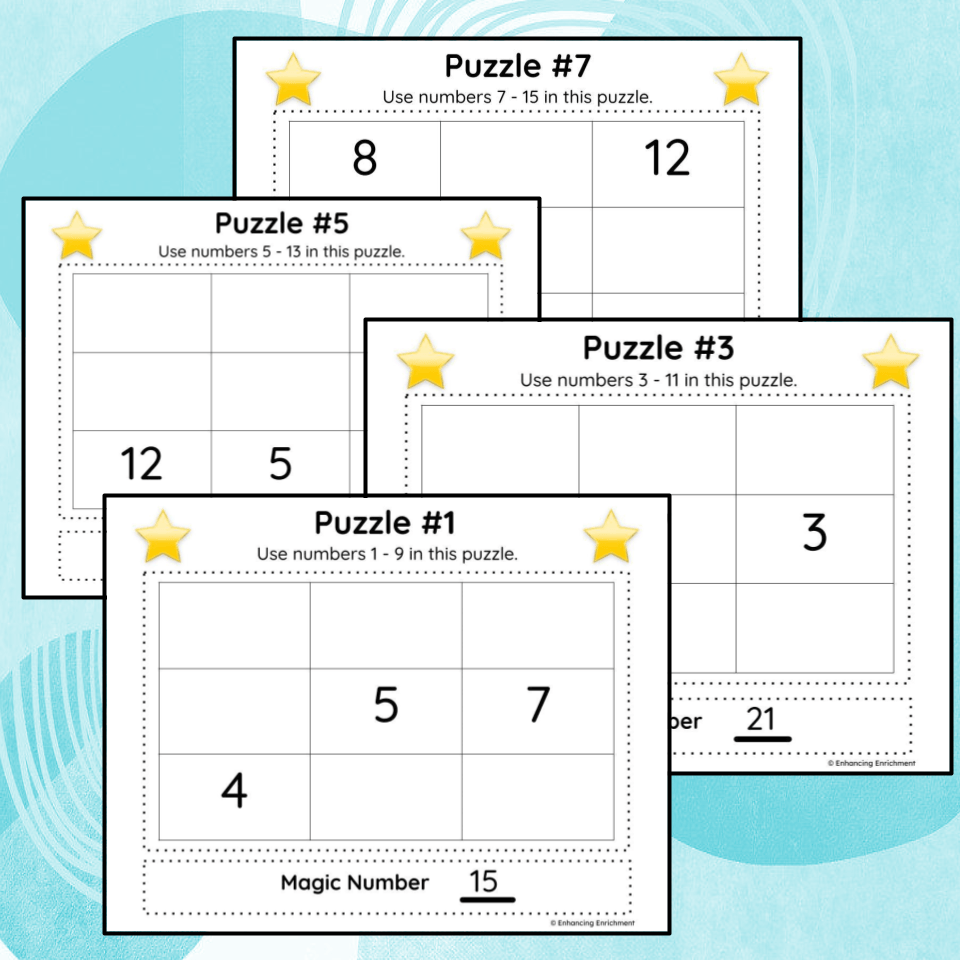
1. Magic Square Puzzles
Magic squares are a classic math puzzle that require quite a bit of strategic thinking. In these puzzles, students need to make the magic number found in the star. Every row, column, and both diagonals must add up to the same sum, and each number can only be used once.
Students need to look for patterns and consider how the numbers work together. They can use the numbers they already know to figure out what is missing and think about how the magic number is related to the number in the center. I like these puzzles because placing one number affects the possibilities throughout the rest of the puzzle. Students have to think several steps ahead rather than just solve one problem at a time.
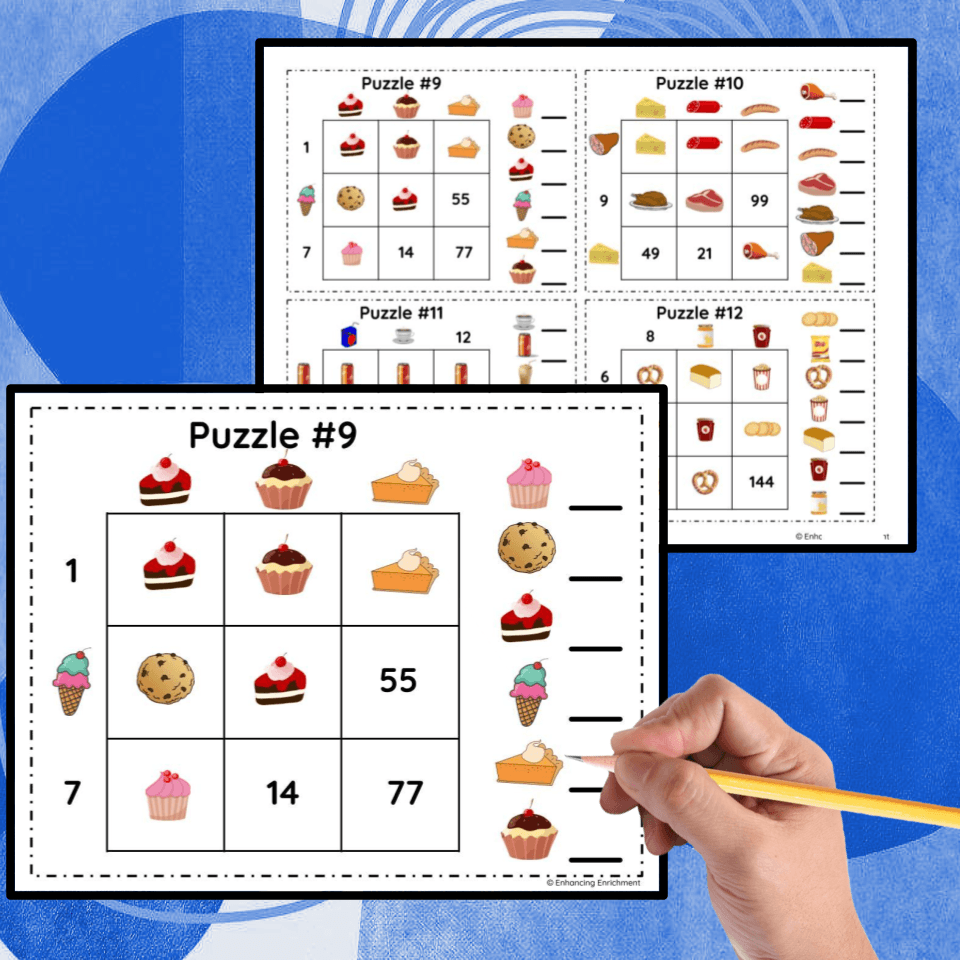
2. Multiplication Grid Puzzles
Multiplication Grid Puzzles take multiplication skills and add reasoning and critical thinking. Students are given row and column labels that include both numbers and symbols. Using the numbers already provided in the grid, they have to determine what each symbol represents.
Once a symbol’s value is determined, students use that same value throughout the puzzle. They then multiply the row label by the column label to determine the value of each box. This means students aren’t just practicing multiplication facts. They’re using information from different parts of the grid, looking for connections, and checking whether their answers make sense.
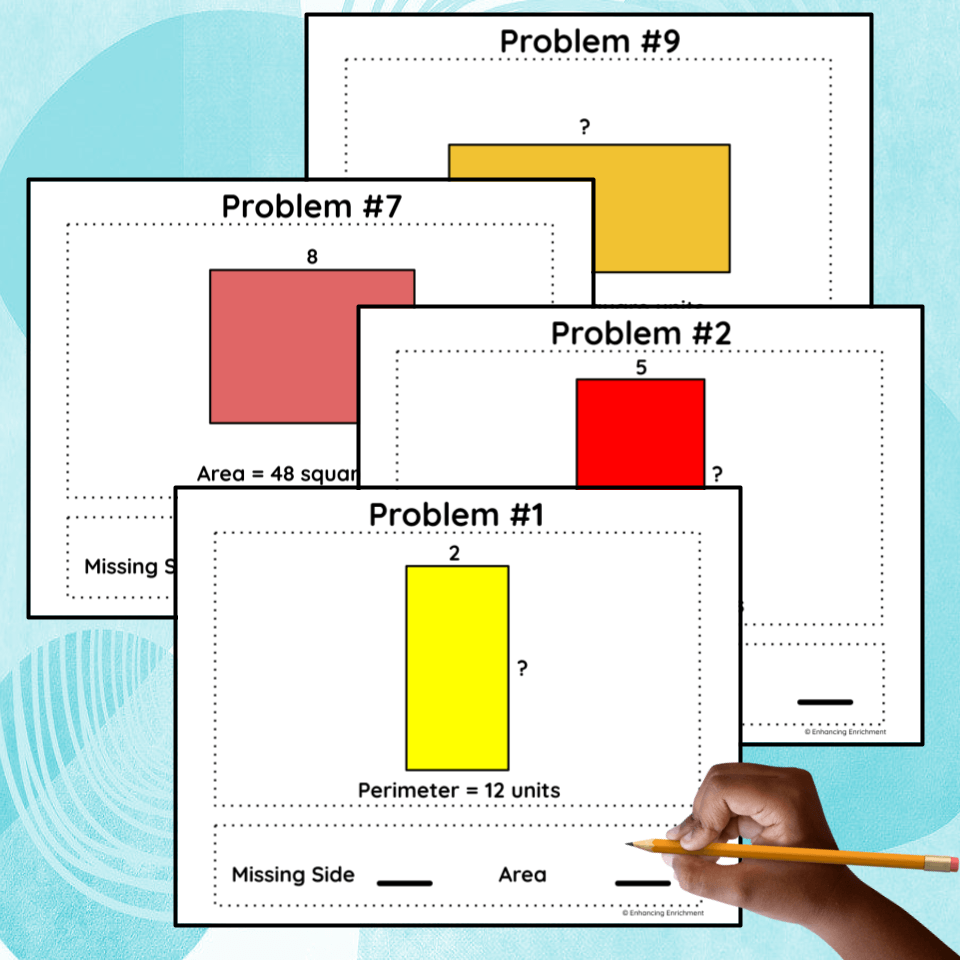
3. Missing Side & Perimeter Puzzles
Area and perimeter are skills students often practice by plugging numbers into formulas, but these puzzles give them a reason to think a little differently. Instead of measuring a missing side, students have to use the information they are given about a rectangle or square to work backward and determine the missing measurement.
Some puzzles focus on area, while others focus on perimeter. Students have to decide what information they need and use what they already know about the shape to find the missing side. It’s a great way to give students additional practice with area and perimeter while adding a problem-solving component.
4. Mobile Math Balance Puzzles
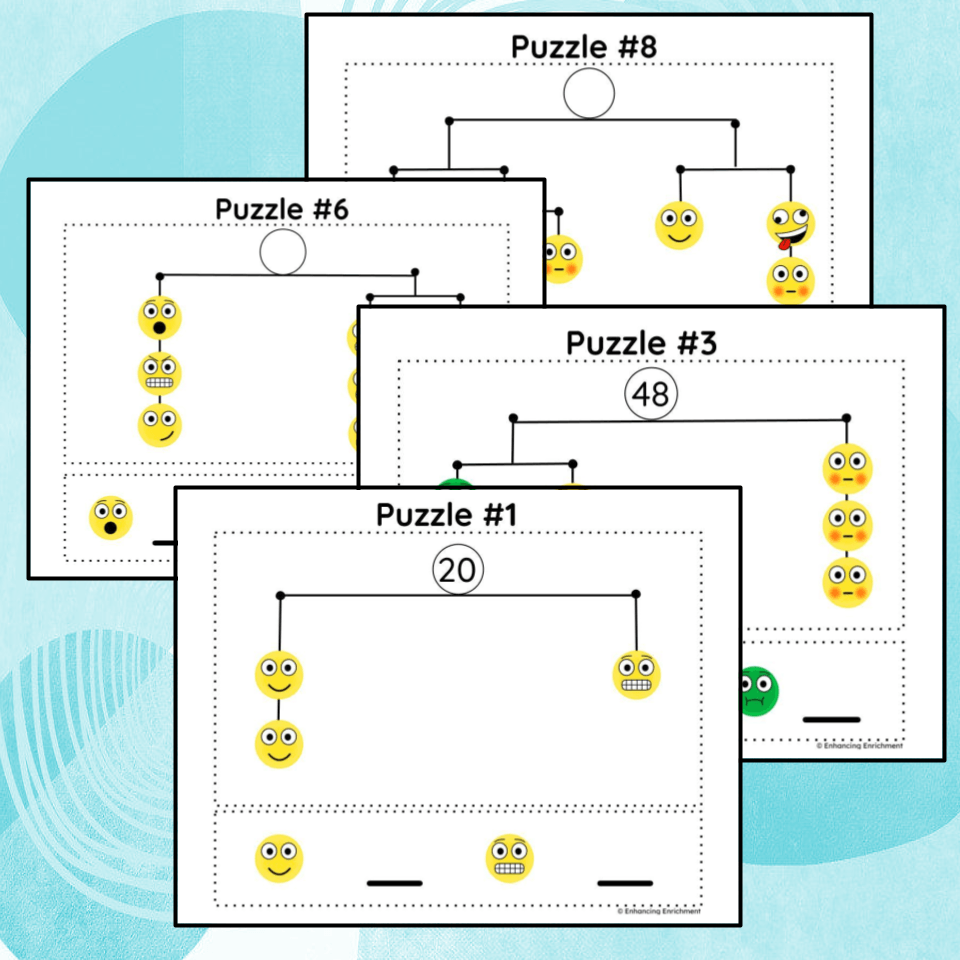
Mobile Math Balance Puzzles look a little different from traditional math problems because they are designed like balanced mobiles. Each side of the mobile must have the same total value, and when a side is divided into two or more branches, each branch must also have the same value.
Some puzzles provide the total value of the entire mobile, while others give students the value of one of the shapes. From there, students have to use the information they know to determine the values of the remaining shapes.
I especially like the visual nature of these puzzles. Students have to think about how all of the different parts work together rather than treating each equation as a separate problem. Read more about using mobile math puzzles in this blog post or download these free Emoji Mobile Puzzles to try in your classroom.
5. Math Logic Puzzles
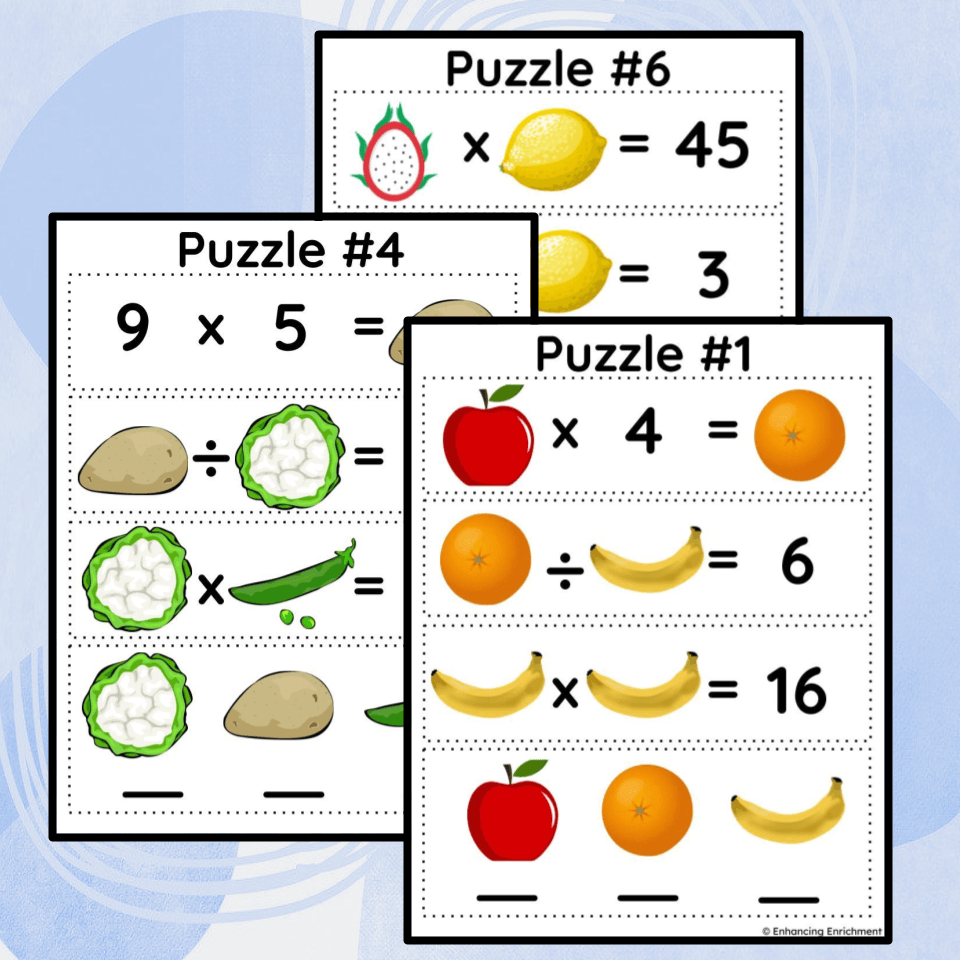
Math Logic Puzzles are another great example of how one piece of information can unlock an entire problem. In these puzzles, pictures represent numbers, and students have to figure out the value of each picture. The same picture always represents the same number throughout the puzzle.
Students don’t necessarily want to start at the top and work their way down. Instead, they need to look for equations they can solve right away. Once they determine the value of one picture, they can use that information to solve another equation, which may give them the information they need to solve the next one.
Each puzzle asks students to determine the values of three pictures and then use those values to solve a final equation. This format encourages students to look at a problem as a whole and decide where they should begin rather than following a set of steps. Read more about using math logic puzzles in this blog post.
6. Area Model Puzzles
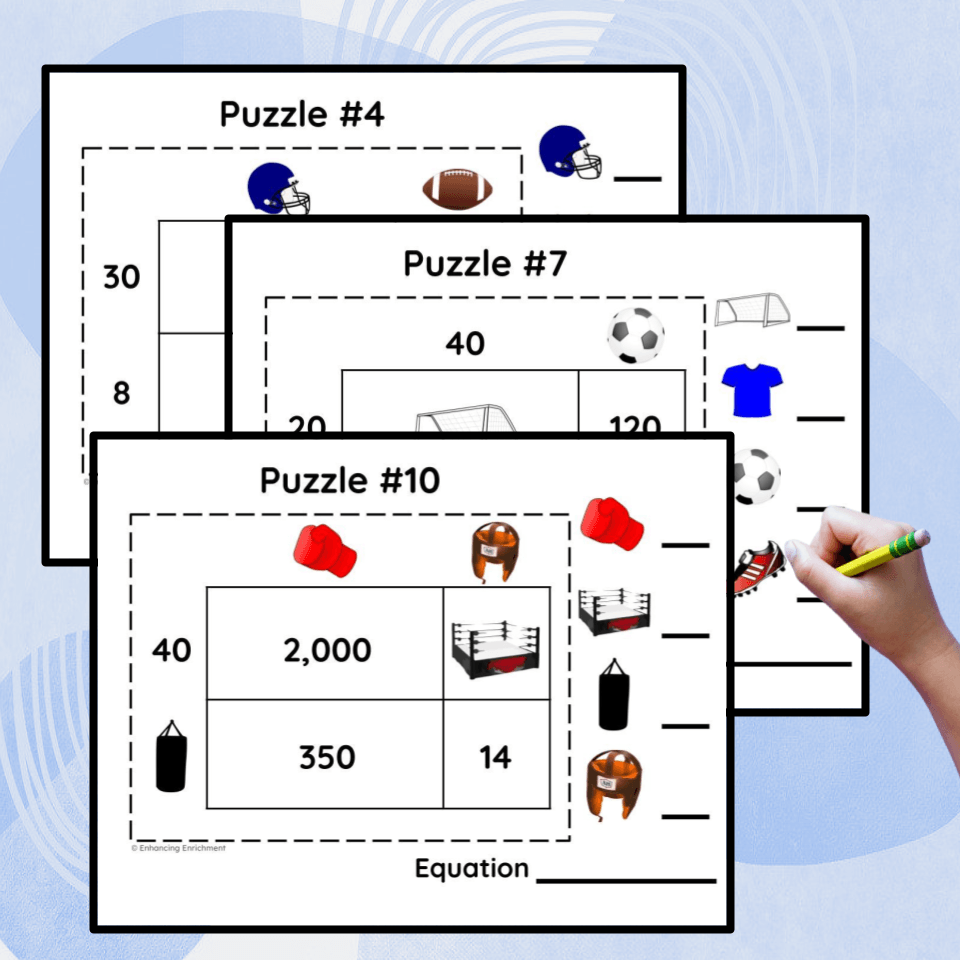
Area models are a helpful tool for understanding multiplication, and these puzzles give students a chance to use that model in a less traditional way. Students break numbers into smaller parts, multiply each part, and then add those products together to find the total.
The numbers on the outside of the box represent the factors, and the four boxes inside the model must add up to the total value. Puzzles also include symbols, with the same symbol representing the same value each time it appears.
What makes these different from a typical area model exercise is that students may have to figure out missing information along the way. They are combining multiplication and place value with problem-solving as they use the information they have to determine what belongs in the missing spaces.
7. Missing Receipt Information
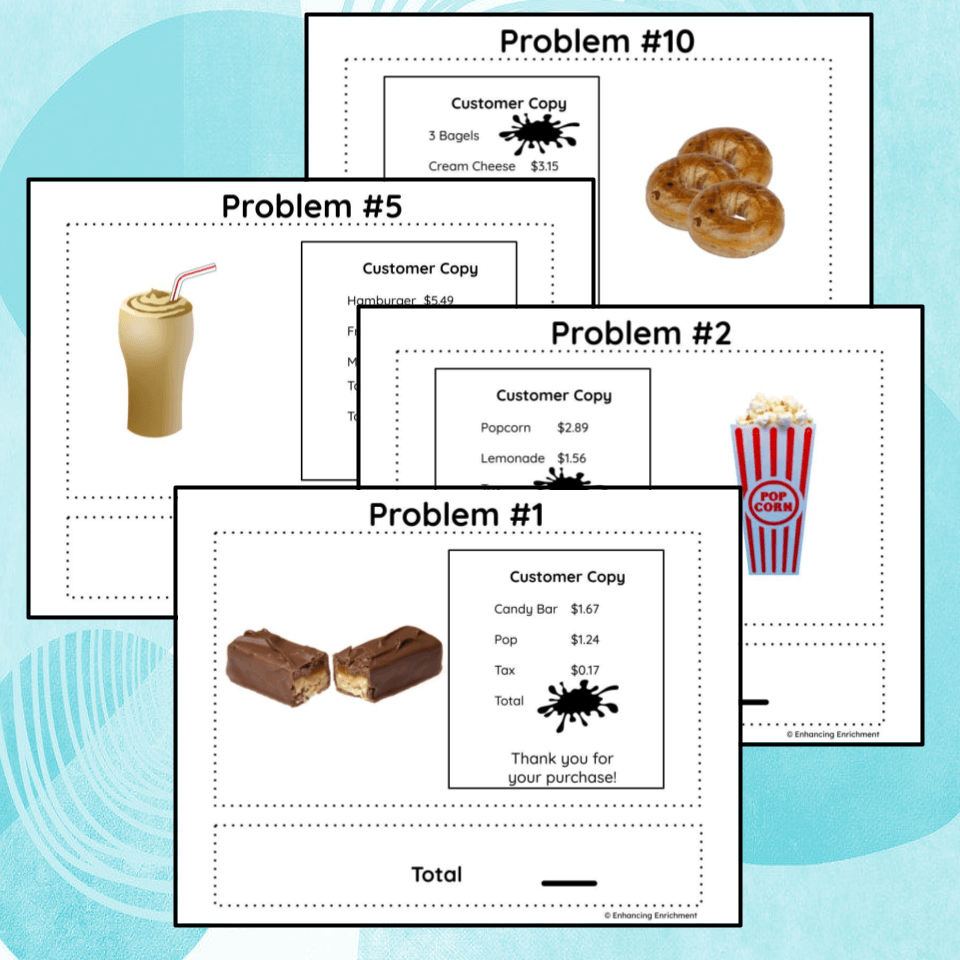
Who doesn’t love a little real-world math? Missing Receipt Information puzzles give students a familiar situation and ask them to figure out what is missing.
Students might need to find a missing total by adding the amounts on a receipt, or they might need to find a missing item price by subtracting known amounts from the total. Some puzzles even require students to divide to determine the price of a single item.
The receipts include situations involving things like food and hotel stays, making the math feel a little more practical. Instead of being told which operation to use, students have to figure out what the problem is asking and decide whether addition, subtraction, or division will help them find the missing information.
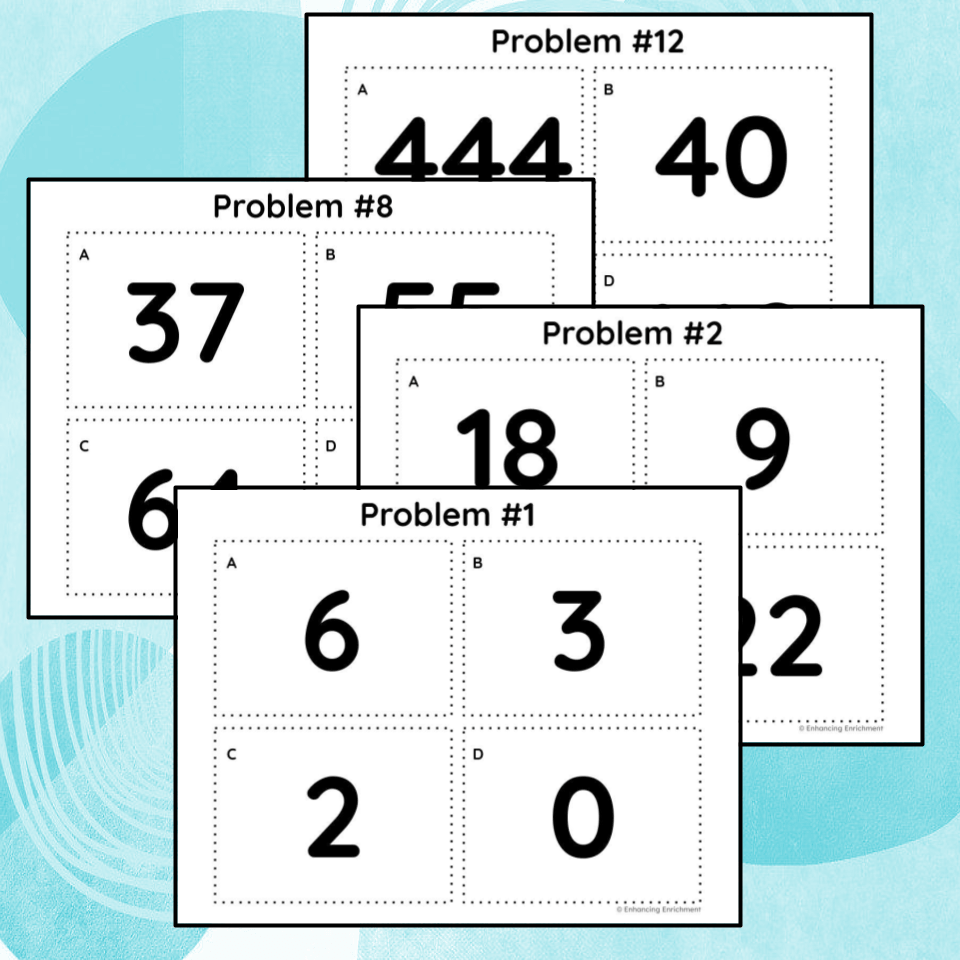
8. Which One Doesn’t Belong?
Which One Doesn’t Belong is one of my favorite types of mathematical thinking because there isn’t necessarily one correct answer.
Students are given four numbers and asked to determine which one doesn’t belong with the others. The interesting part isn’t choosing a number. Students need to explain their thinking and support their answer with mathematical reasoning and vocabulary.
Maybe one number is the only odd number. Maybe one is the only prime number. Or perhaps a number has a different factor, multiple, or other mathematical characteristic. There can be several possible answers depending on the reasoning students use.
Students can even take the challenge a step further by trying to find a reason why each of the four numbers could be the one that doesn’t belong. This turns the activity into an opportunity to think flexibly and look at numbers in different ways. Read more about using Which One Doesn’t Belong and download templates for students to create their own puzzles in this blog post.
9. Spatial Reasoning Puzzles
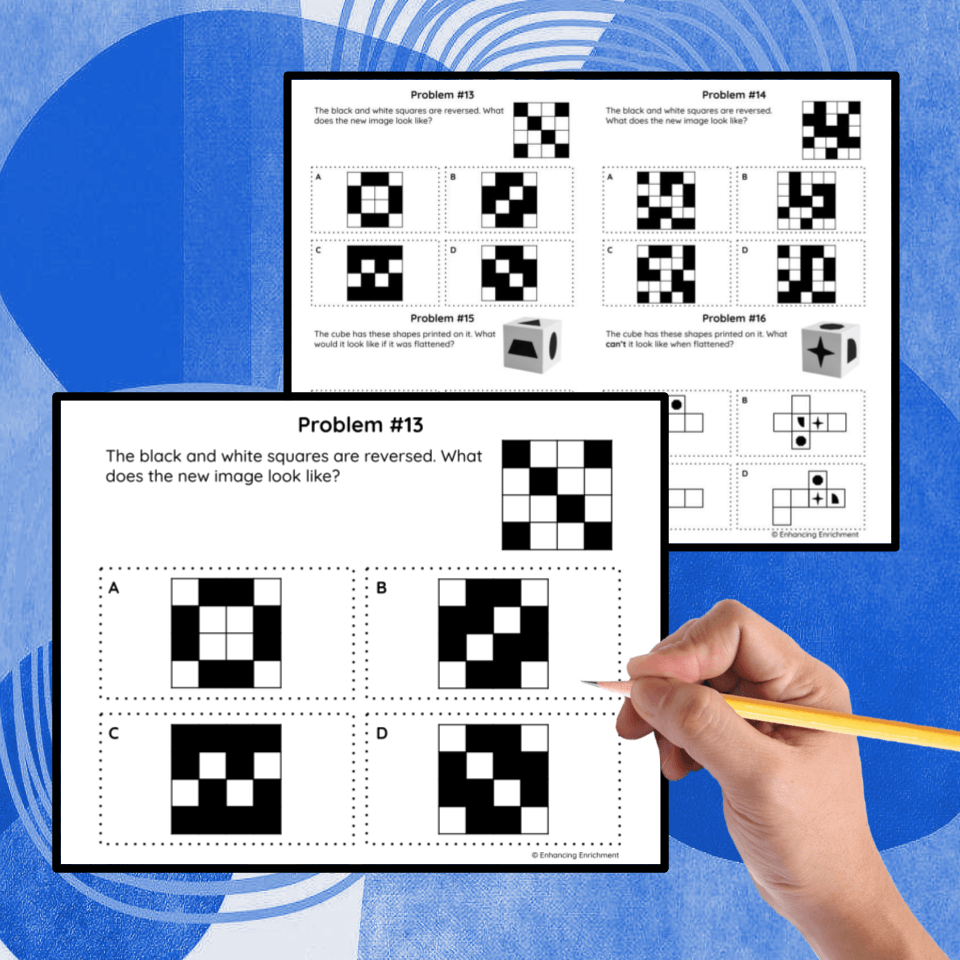
Not all mathematical thinking involves numbers. Spatial Reasoning Puzzles give students an opportunity to work with shapes, positions, and space in a different way.
Students are encouraged to first try to solve these puzzles mentally. They may need to visualize what a shape would look like from a different angle or imagine what happens when something is rotated or flipped. They can eliminate choices that clearly won’t work or sketch something out if they need a little help visualizing the problem.
I like including spatial reasoning activities because they give students a chance to use a different kind of mathematical thinking than they might use during a typical math activity. For some students, these puzzles may feel completely different from the math they are used to doing, and they might find a new area of strength.
10. Move a Stick Puzzles
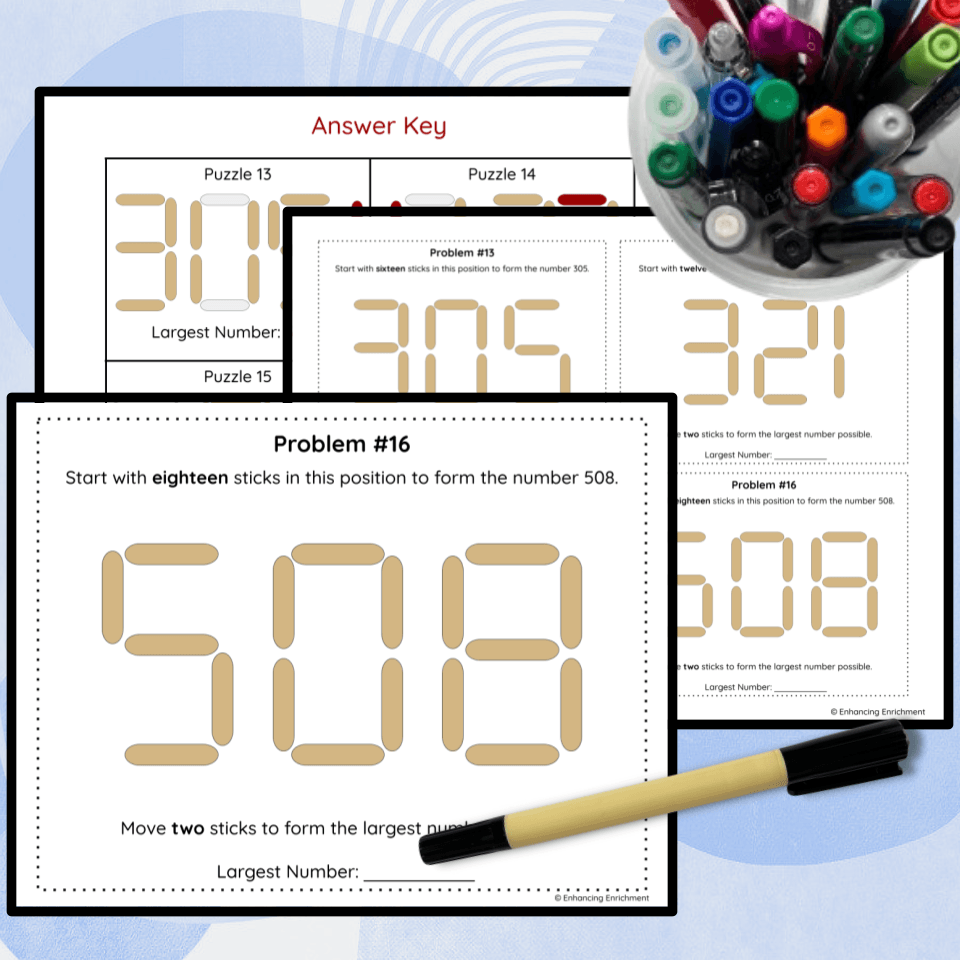
Move a Stick Puzzles provide one more opportunity to think outside the box. Students begin with a number made from a specific number of sticks, and their challenge is to move one or two sticks to create the largest number possible.
As the puzzles progress, the numbers become larger and students work with more sticks. They have to carefully consider how moving just one stick can change the value of a number.
And sometimes your first thought isn’t your best move! That’s part of what makes these puzzles so much fun. Students have to look at the problem from a different perspective and be willing to reconsider their first idea when it doesn’t lead to the best solution.
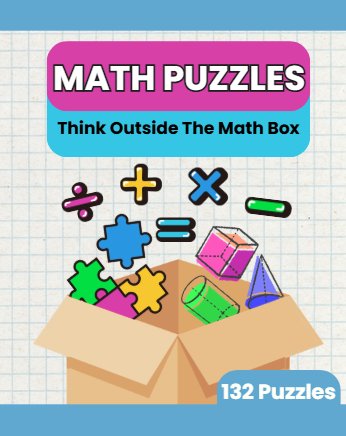
If you’re looking for screen-free ways to challenge students with math, all ten of these puzzle types are included in the new book Math Puzzles: Think Outside the Math Box. The puzzles cover a variety of skills and encourage students to think critically, look for patterns, use mathematical reasoning, and persevere through challenging problems. Whether you’re looking for an enrichment activity, an early finisher option, or something for a child who simply loves a good challenge, these puzzles offer a fun way to get students thinking about math in a different way.


Leave a comment