“19!” the fifth-grade teacher calls down the hallway as I walk in. I know exactly what he means. That’s how many days we have left of school—and we’re counting. Even though this time of year feels exhausting and overwhelming, in less than a month, my biggest morning decision will be whether to read my book on the porch or on the couch.
But to get there, I want to honor the excitement of the end of the year while still creating meaningful opportunities for my students to think creatively and engage in higher-order thinking. Keep reading for some of my students’ favorite end-of-the-year activities.

Please note that some links in this post are Amazon affiliate links. If you click and make a purchase, I earn a small commission at no extra cost to you. Thanks for helping support the site!
ELA Activities
- Year-Round School Socratic Seminar
- End-of-the-Year 3D Cube
- Finish the Picture Creative Writing
- Digital Memory Book
Year-Round School Socratic Seminar
Challenge your students’ thinking at a time when they are approaching summer break by asking them if they think there should be year-round school instead. There opinion may surprise you!
Fourth, fifth, and sixth-grade students will read all about the pros and cons of each side and form an opinion. They will then cite evidence from the text to discuss and debate their points of view and listen to the points of view of their classmates.
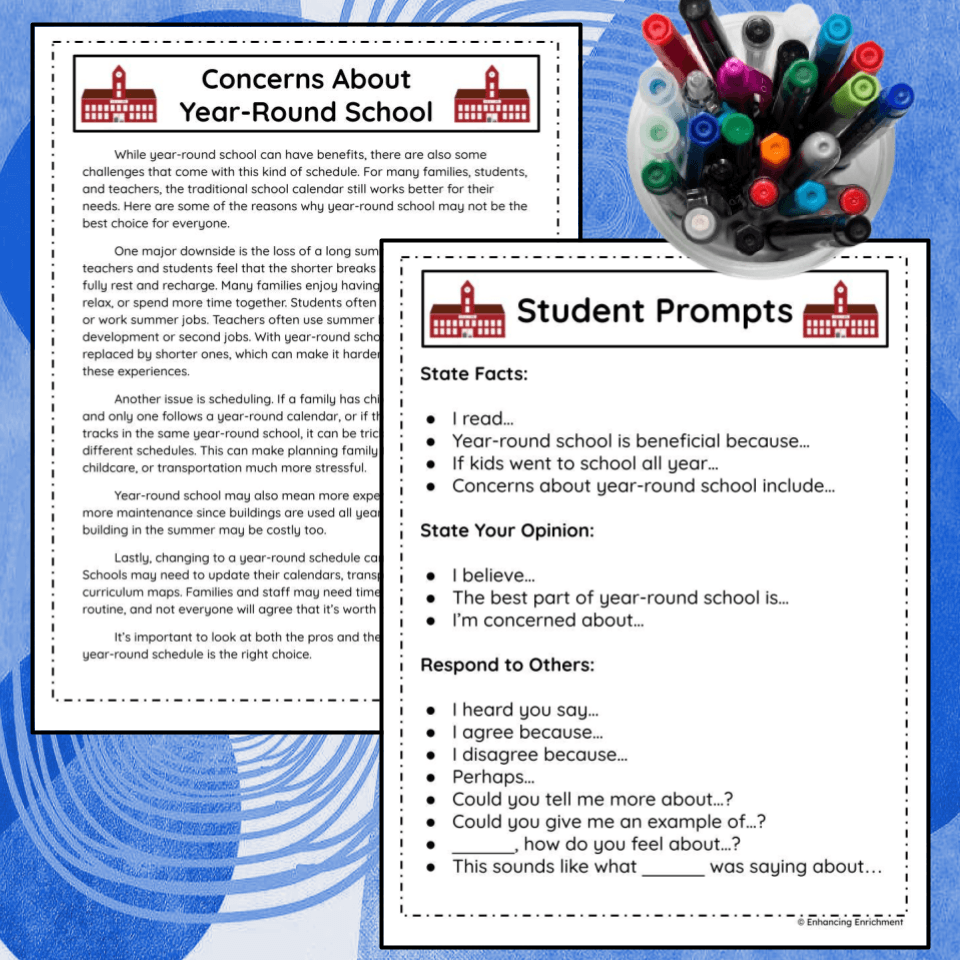
The typical format of a Socratic Seminar involves two circles. The inner circle participates in the discussion. The outer circle keeps track of the interactions between the group members. Students must think critically about the topic in order to analyze information on both sides of the issue. They must also be ready to respond to students who have opposing viewpoints. Read more in the Socratic Seminar blog post or download the free Socratic Seminar graphic organizers to use with any topic.

End of the Year 3D Cube
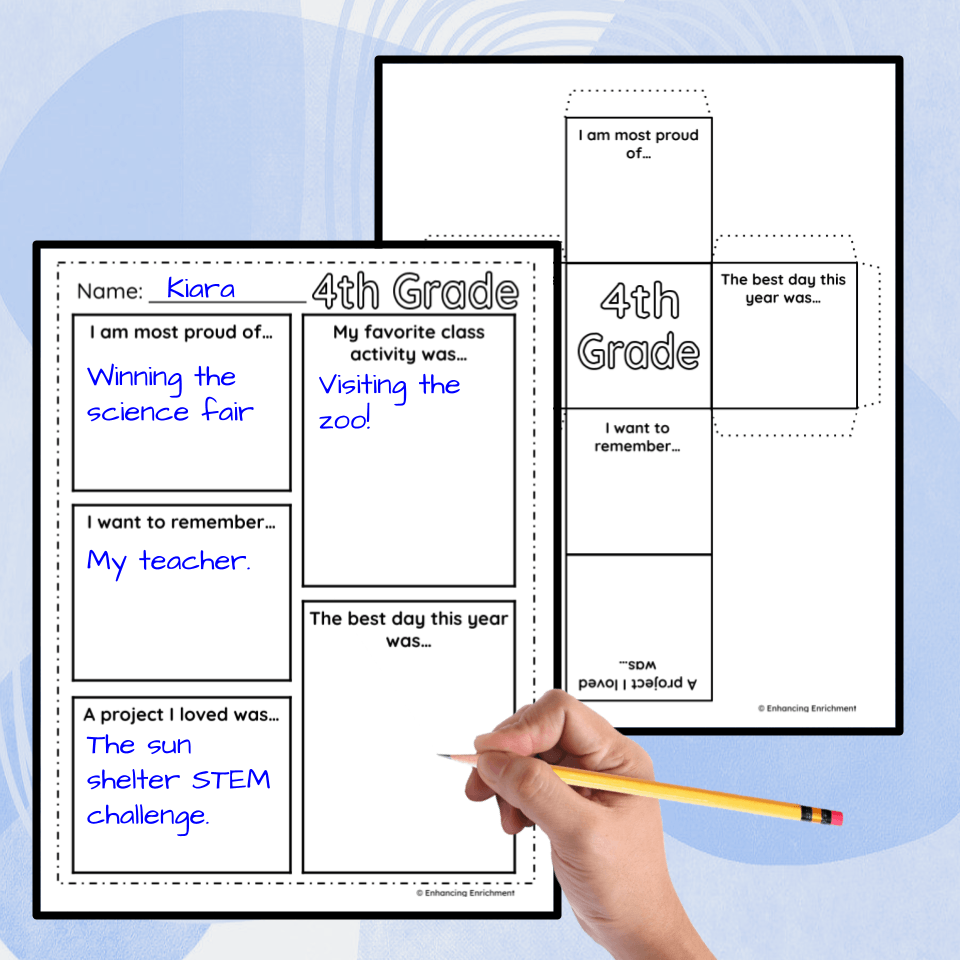
Wrap up the school year with a fun reflection activity using an end-of-the-year cube! This quick craft gives students the chance to look back on their favorite memories, celebrate their accomplishments, and start thinking ahead to summer and the next school year. With a variety of ready-to-use templates for third, fourth, and fifth grade, along with options focused on summer plans and future goals, you can easily choose what fits your class best. There’s even a blank template and an editable Google Slides version so you can customize prompts to match your students’ experiences.
As students complete each side of the cube, they’ll reflect on different aspects of their year before assembling it into a small 3D keepsake. Once finished, the cube can be displayed at home or on a desk as a fun reminder of their growth and memories from the year. It’s a simple, low-prep way to bring closure to the school year while keeping students engaged and excited.
Finish the Picture Creative Writing
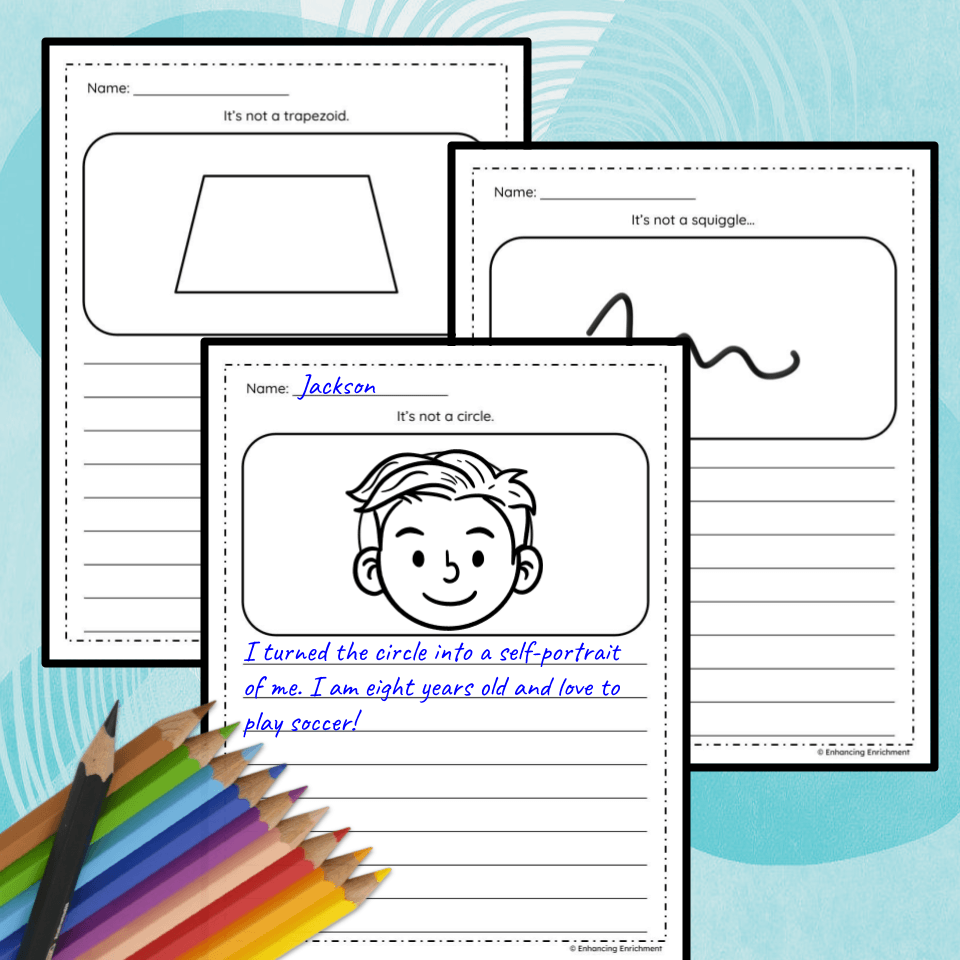
Spark creativity with a quick Finish the Picture writing challenge! Students start with a simple, incomplete image and use their imagination to complete the drawing and then write a story to match. It is a fun way to encourage creative thinking, storytelling, and original ideas, making it perfect for those high energy end of the year days. Best of all, this activity is free in the Free Resource Library. Grab it now and get students excited to write again.
Digital Memory Book
Create a digital memory book using Google Slides by giving each student their own slide deck or assigning one slide per student in a shared class file. Students can insert photos from throughout the year, choose layouts, add text boxes for captions, and include details like favorite memories, proud moments, or class events. You can provide a few optional prompts or let students design each slide from scratch for more choice. Once slides are complete, combine them into one class presentation or download as a PDF to share with families.
Math Activities
- Summer Logic Puzzles
- End-of-the-Year Math Mystery
- Design a Backyard
- Plan a Carnival Project-Based Learning
Summer Logic Puzzles
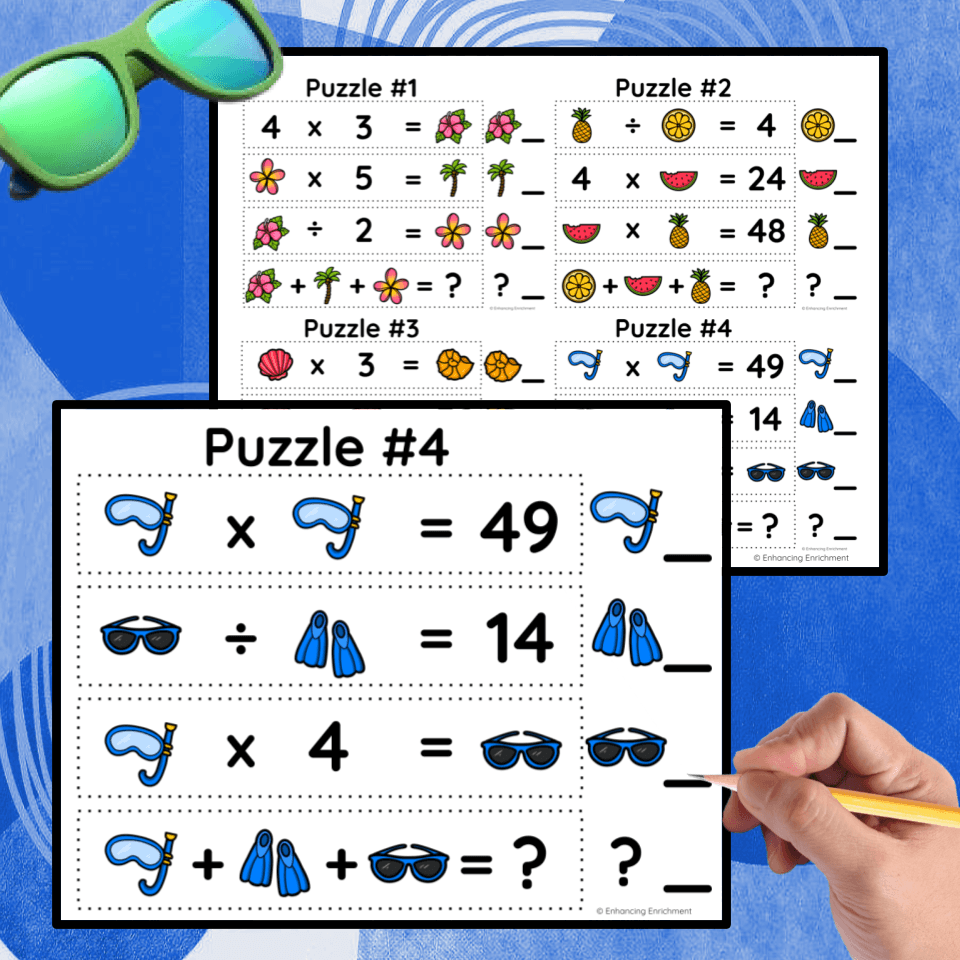
Math logic puzzles are a must-have for challenging high-achieving students. In these puzzles, symbols replace numbers, and students must use their knowledge of equations and operations to determine each symbol’s value. This type of problem-solving encourages critical thinking, strengthens algebraic reasoning, and provides a fun, hands-on way to deepen understanding. Learn more in the Using Math Logic Puzzles post.
These Summer Multiplication and Division Logic Puzzles are designed to engage and challenge advanced math students. After students solve twelve puzzles where pictures take the place of numbers, they are then ready to extend their learning by designing their own logic puzzles to challenge their classmates. Students can create, solve, and self-assess their puzzles using the provided rubric.
End-of-the-Year Math Mystery
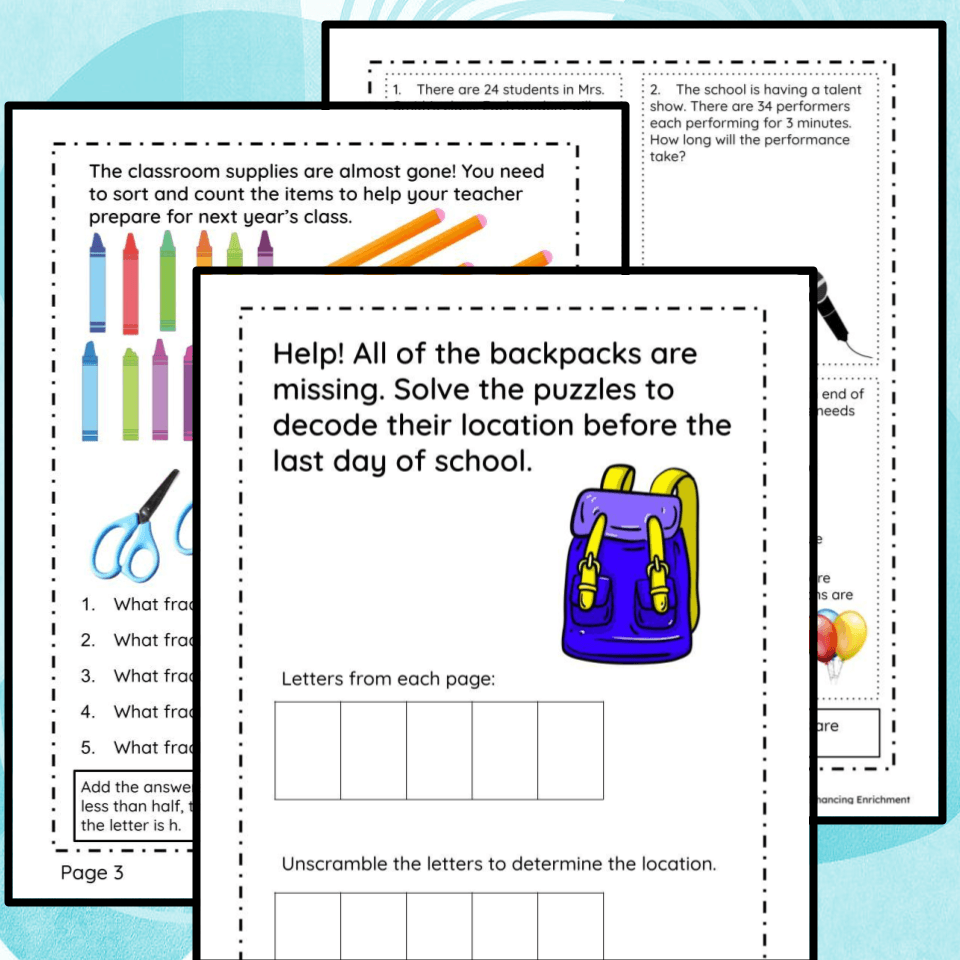
Turn math review into an exciting adventure with the End of the Year Math Mystery Challenge. Students step into a storyline where the school backpacks have gone missing and they must use their math skills to solve the case. As they work through each page, they complete a mix of puzzles, equations, and word problems that review multiplication, division, fractions, decimals, and more. Each solved section reveals a letter that slowly helps them uncover the final location of the missing backpacks.
This activity includes two versions of several pages to support different learning needs, along with a full answer key for easy checking. Students will move through story problems, sorting tasks, and skill-based challenges that keep them engaged while reinforcing key math concepts from the year. With everything ready to print and go, it is an easy way to bring problem-solving and critical thinking into those busy end-of-the-year days.
Design a Backyard
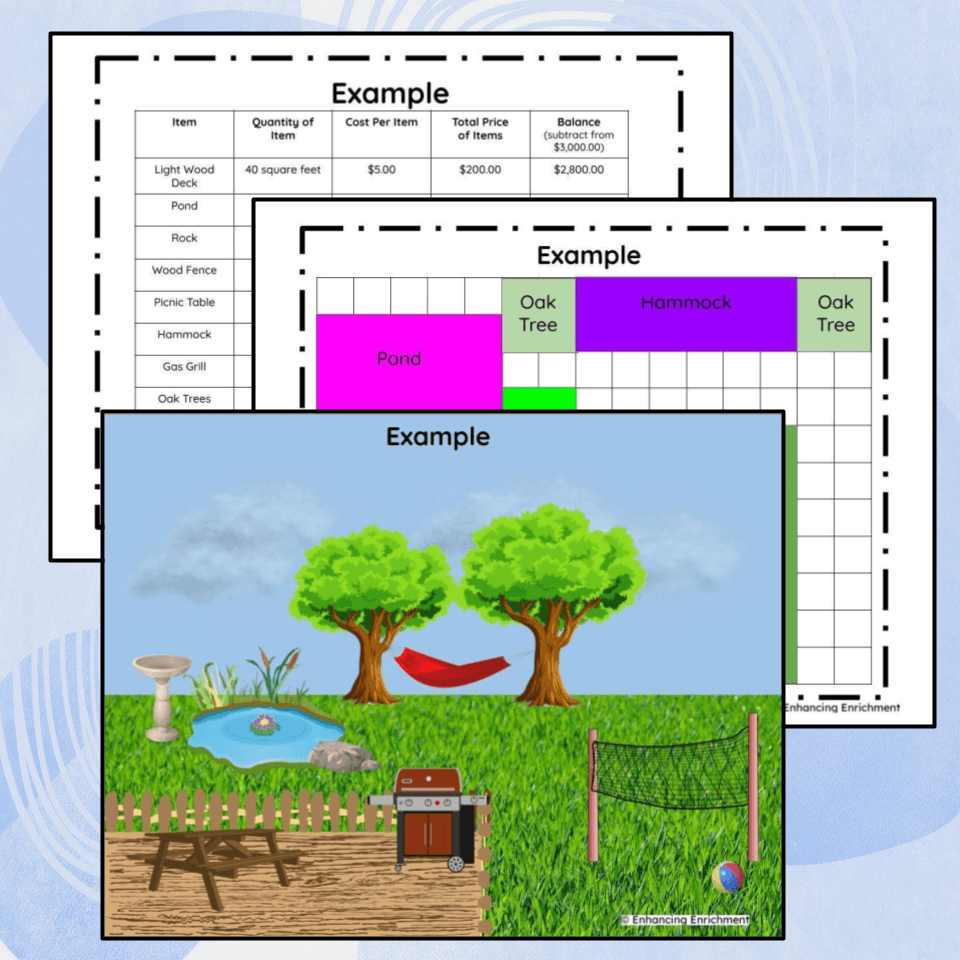
Engage students in a creative and math-focused challenge with the Design a Backyard digital activity. Using Google Slides, students design their own dream outdoor space by selecting items from eight categories, including ground, landscape, furniture, equipment, plants, sports, toys, and accessories. As they build their design, students stay within a $3,000 budget, track their spending, and make thoughtful choices about what to include in their backyard layout. They also use item dimensions to calculate area and perimeter, applying geometry skills in a meaningful, real-world context.
This resource includes two separate versions to support different grade levels. The 3rd and 4th grade version features even, simplified pricing to help students focus on budgeting and basic calculations. The 5th and 6th grade version includes more varied pricing for a greater challenge, along with an optional sales tax component to extend the real-world application.
Plan a Carnival PBL
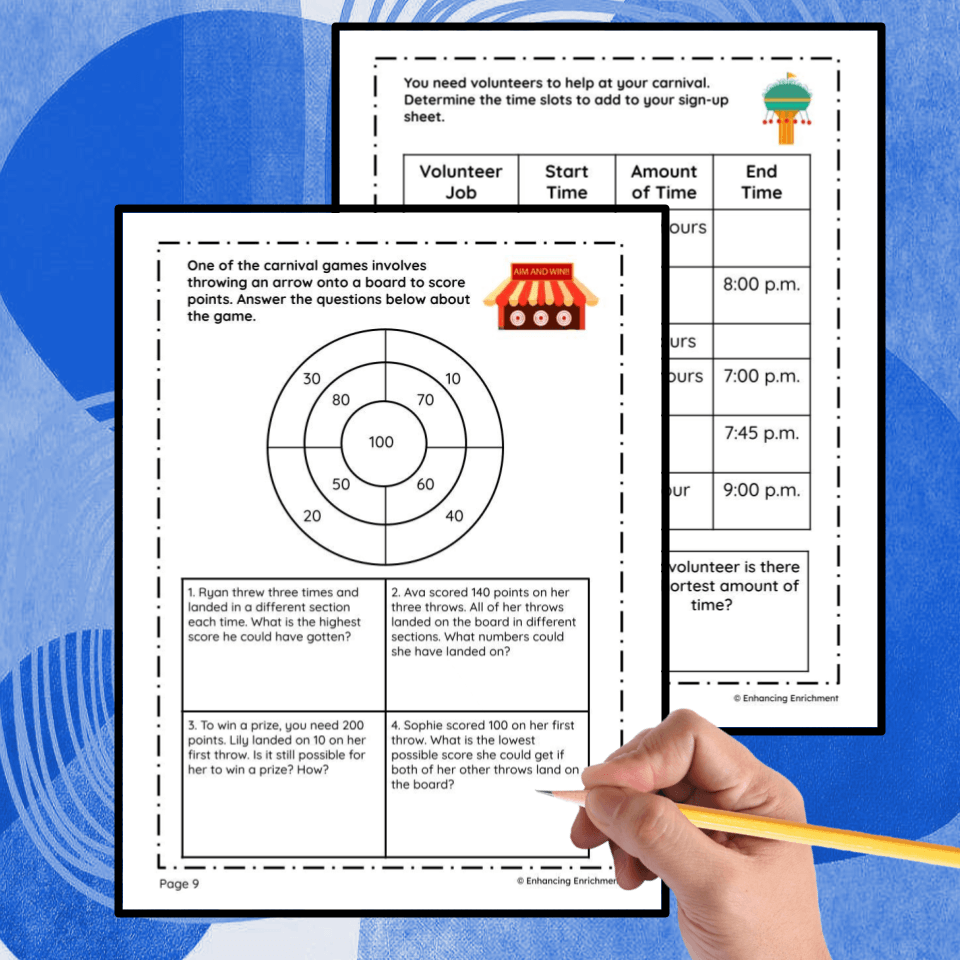
Another creative math option is planning a carnival where students take on the role of event organizers. They choose supplies such as games, rides, food stands, and decorations, then purchase them within a set budget while making thoughtful financial decisions along the way. Students design a detailed carnival layout using fractions to represent how space is divided among attractions, ensuring their setup is both balanced and functional. They also calculate area and perimeter for different sections of the carnival to support their design choices and accuracy.
STEM Activities
- Build a Marble Track
- Create a Sun Shelter
- Build a Solar Oven
Build a Marble Track
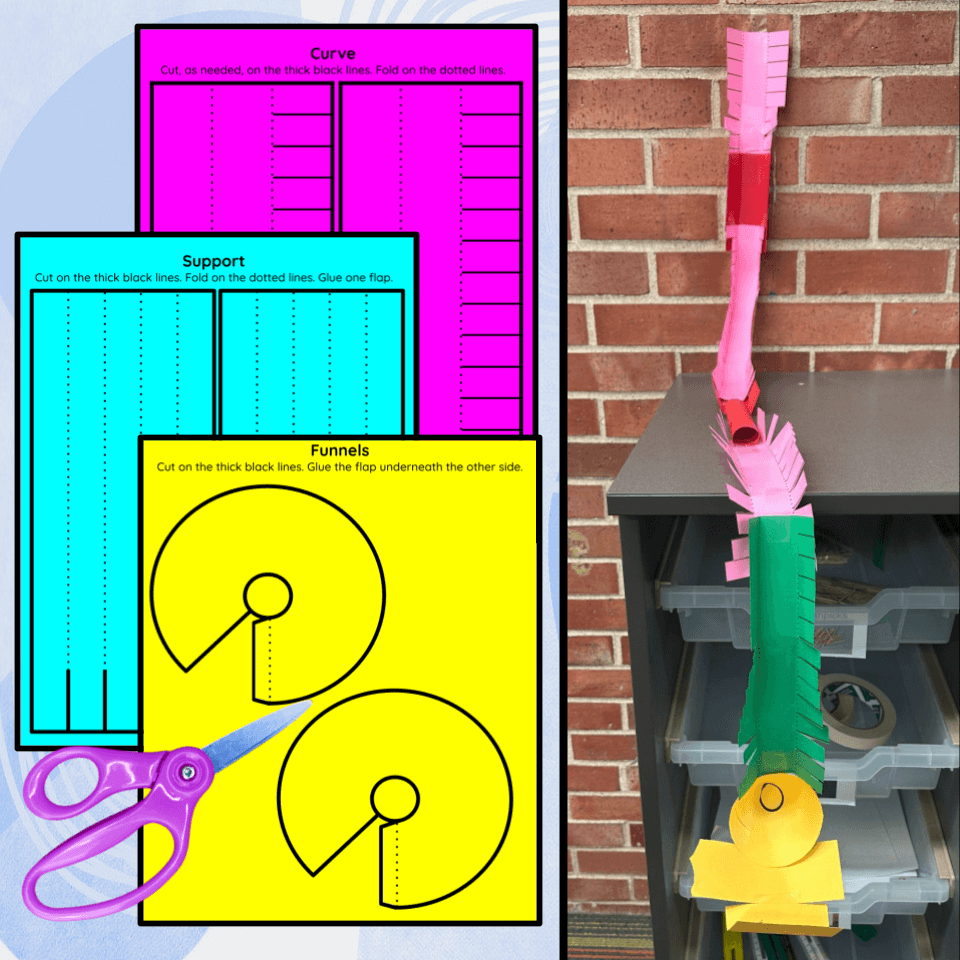
Students will love designing and building their own marble runs in this hands-on STEM challenge. Using recycled materials or printable templates, they plan and construct marble tracks while working through the engineering design process of asking, imagining, planning, creating, testing, improving, and reflecting. Students then experiment with their designs, making adjustments to improve how their marble travels through the course.
This activity encourages problem-solving, creativity, and collaboration while reinforcing science and engineering standards. It is flexible enough for whole group, small group, or independent work, and includes structured student pages to guide each step of the process from planning to reflection.
Create a Sun Shelter
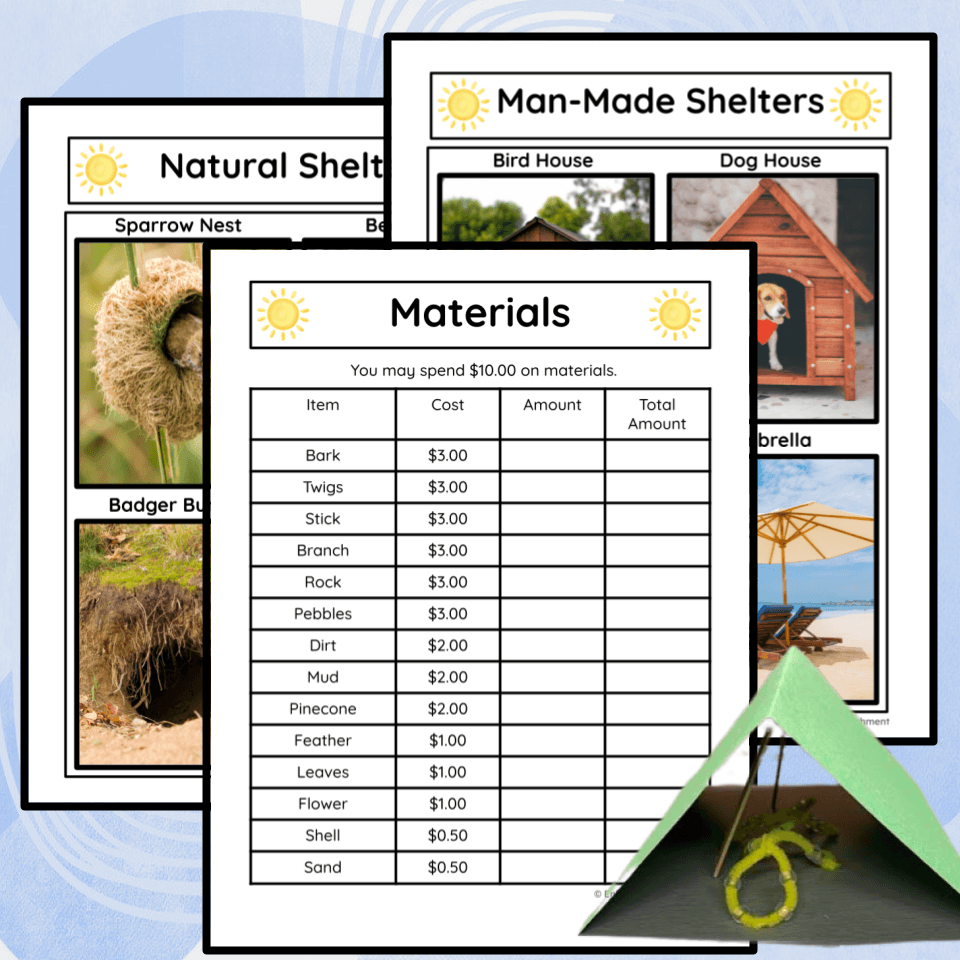
For another creative STEM activity, challenge students to build a shelter for a small “creature” made from UV beads and pipe cleaners. The twist is that the beads change color when exposed to sunlight, so students must design a structure that protects their creature from UV rays. Using a limited set of classroom or natural materials like sticks, leaves, grass, and bark, students plan and build shelters that provide the most shade and coverage.
Students test their shelters at different times of day, such as morning, midday, and afternoon, to observe how the angle and intensity of the sun affect their design. As they observe whether the beads change color, they can make improvements to block more light. This adds a deeper layer of thinking while still keeping the activity simple, hands-on, and easy to set up outdoors.
Build a Solar Oven
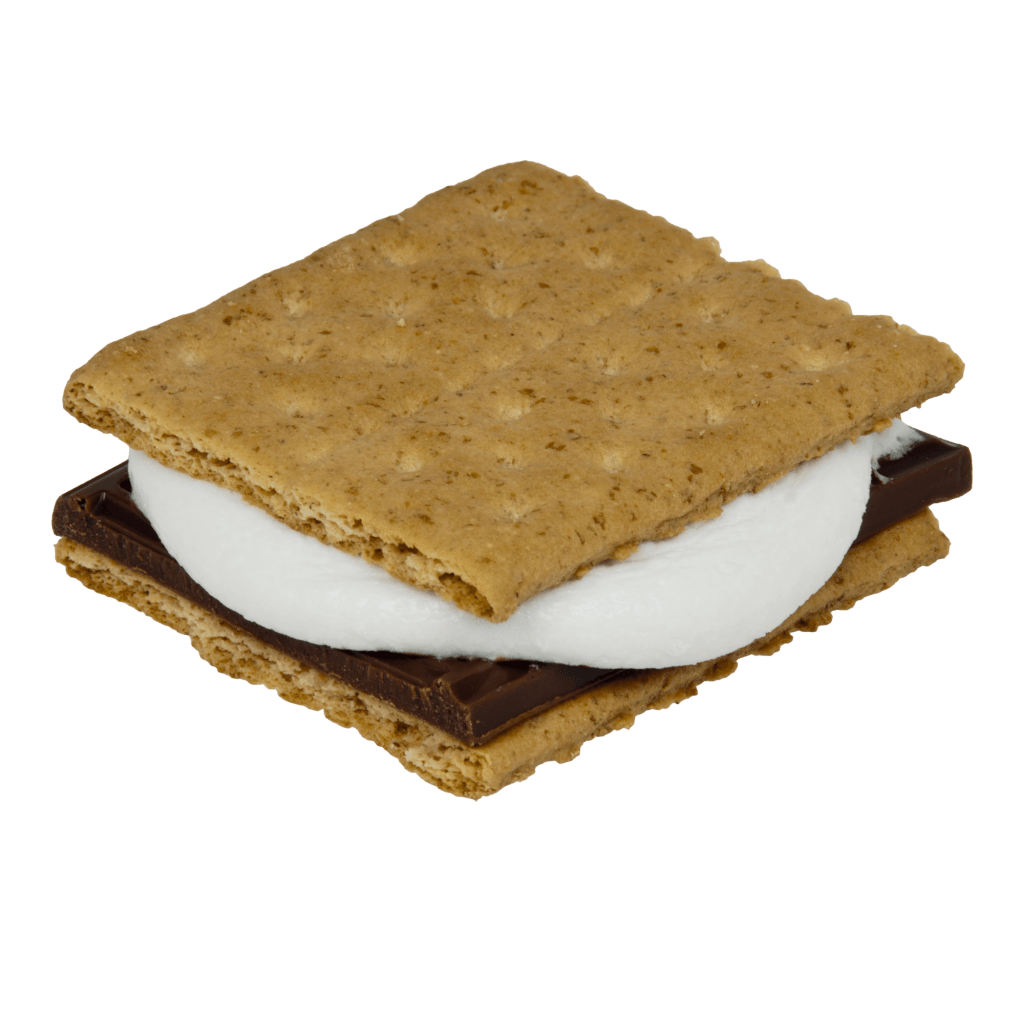
For another engaging end-of-the-year STEM activity, challenge students to design and build a simple solar oven using materials like a pizza box, tin foil, plastic wrap, and black construction paper. Their goal is to harness the sun’s energy to melt chocolate and marshmallows for a tasty treat. Students will plan and construct their ovens to capture and retain as much heat as possible, thinking carefully about reflection, insulation, and sunlight exposure.
Students can test their solar ovens at different times of day and in varying temperatures to see when their ingredients melt the most effectively. As they observe which designs work best, they can adjust angles, add more foil, or improve insulation. This adds a layer of experimentation and data analysis while keeping the activity fun, hands-on, and highly motivating.
Just for Fun
- Favorite Activities Countdown
- Clean the Desks
- Teach the Teacher
Favorite Activities Countdown
Whether it’s a collection of favorite STEM projects, favorite math games, or favorite outdoor activities, your students have created many fun memories this year. Relive them one more time with an end-of-the-year countdown. You can also include some fun new activities that you’ve been saving for the end of the year, such as a movie day or popsicle day.
Write each activity on a small strip of paper and place it inside a cup. Cover the top of the cup with tissue paper and secure it with a rubber band. Each day, have a student punch through the tissue paper and pull out a strip of paper. Then, find a time during the day to complete the activity.
The benefit of counting down this way is that you can start with as many cups as you want. Five to ten fun days is much more manageable than an alphabet countdown that lasts 26 days.
Clean the Desks
One activity that former students still come back and tell me was their favorite is Cleaning the Desk Day. Spray each desk with a small amount of white shaving cream. Give students time to paint, draw, and write with the shaving cream before wiping it off. While this may look like the opposite of cleaning, it is actually very effective at removing sticky residue off desks, and students love it!
Teach the Teacher
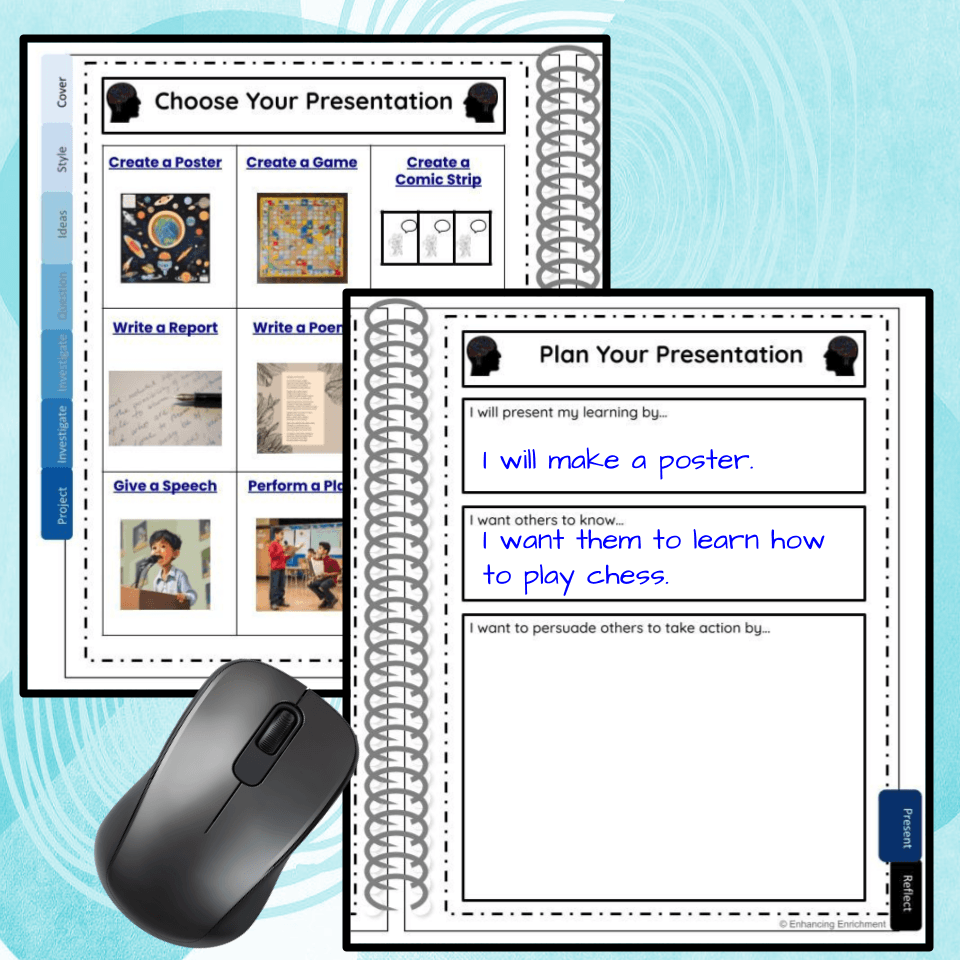
You’ve spent all year sharing your knowledge; now give students the chance to turn the tables and teach you something they know a lot about. This activity can be used in conjunction with a longer passion project or completed in a shorter time frame, but students will need some time to prepare.
Invite students to choose a topic, hobby, skill, or area of interest they are passionate about. They might teach the class how to draw a favorite character, explain the rules of a sport, share facts about an animal, demonstrate a craft, teach a dance move, or explain how to play a game. Encourage students to think about what makes them unique and what they would be excited to share with others.
Students can create a short presentation, poster, slideshow, demonstration, or hands-on activity to teach their classmates. Not only does this give students an opportunity to showcase their strengths and interests, but it also helps build confidence, communication skills, and a sense of classroom community. You may even discover talents and interests your students have never had the chance to share during the school year.
As those final days start to slip away, it is easy to focus only on surviving the end of the year, but this is also one of the best times to lean into creativity, reflection, and meaningful learning. These activities are designed to keep students engaged while giving them space to think, create, and apply the skills they have built all year long.


Leave a Reply