Are you looking for a fun and engaging way to celebrate Valentine’s Day with your gifted and talented students this February? These festive activities are designed to get your upper elementary students thinking, creating, and problem-solving as they explore the excitement of the holiday, all while staying engaged and challenged. From hands-on STEM challenges to creative math and ELA activities, your students will enjoy meaningful learning experiences that bring the fun and spirit of Valentine’s Day into your classroom.
ELA Activities
- Create a Heart Map
- Riddle Poem
- Word Ladders
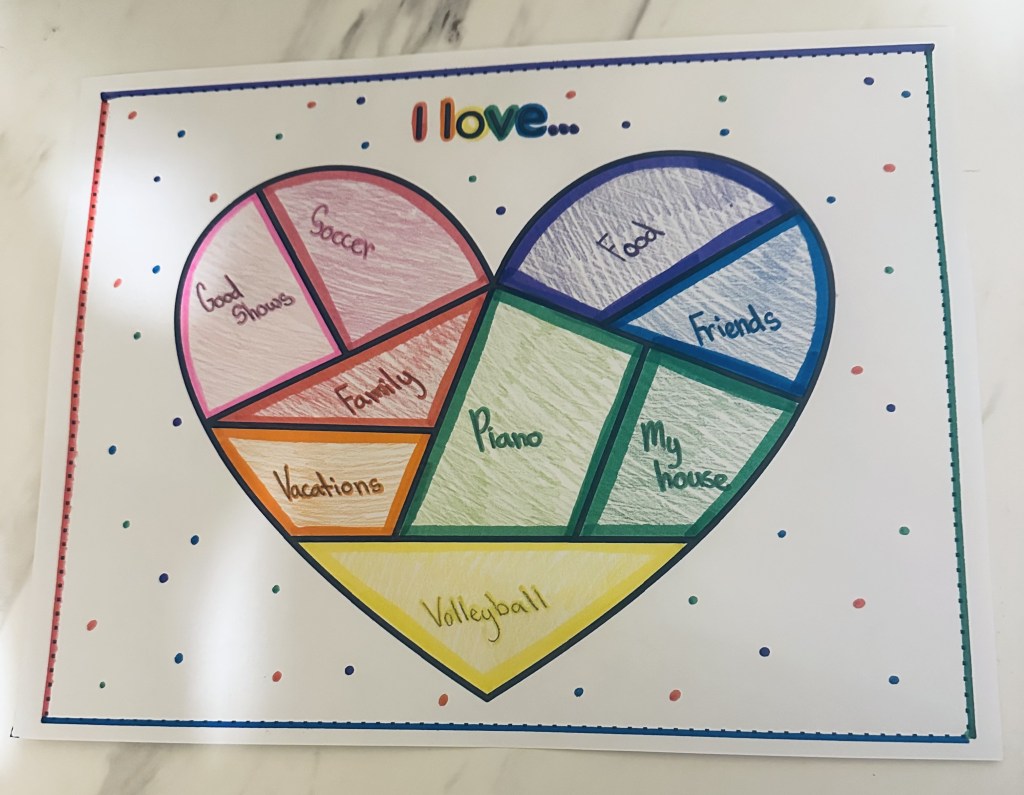
Create a Heart Map
A heart map is a fun way for students to think about the things that matter most to them. Students draw a big heart and divide it into sections. In each section, they can write or draw the people, activities, places, or hobbies that are most important to them. This activity helps students reflect on what they care about while giving them a chance to be creative and personal.
After students finish their heart maps, they can share them with a partner, use them to inspire a short story or poem, or plan a future passion project. Heart maps help students practice thinking about themselves and others, while also encouraging creativity and self-expression. For gifted and talented students, this activity is a simple but meaningful way to celebrate Valentine’s Day while exploring what makes them unique. Grab this free resource in the Free Resource Library!
Riddle Poem
Riddle poems are a playful and challenging way for students to explore language, creativity, and critical thinking. In these poems, the writer describes an object, person, or feeling like love, friendship, or a Valentine’s Day treat without naming it directly. Students use clever clues, descriptive language, and figurative expressions to guide the reader toward the answer, turning the poem into a fun guessing game. Don’t forget to cover the answer!
Riddle poems encourage upper elementary gifted and talented students to think deeply about word choice, imagery, and how to convey ideas in unique ways while adding a festive Valentine’s twist to their writing.
I come in a shape both square and round
Inside me, sweet treasures can be found
Some are creamy, some are nutty, some are bright
I bring a smile with every bite
I am often given on Valentine’s Day
I make hearts happy in a special way
Answer: A box of chocolates
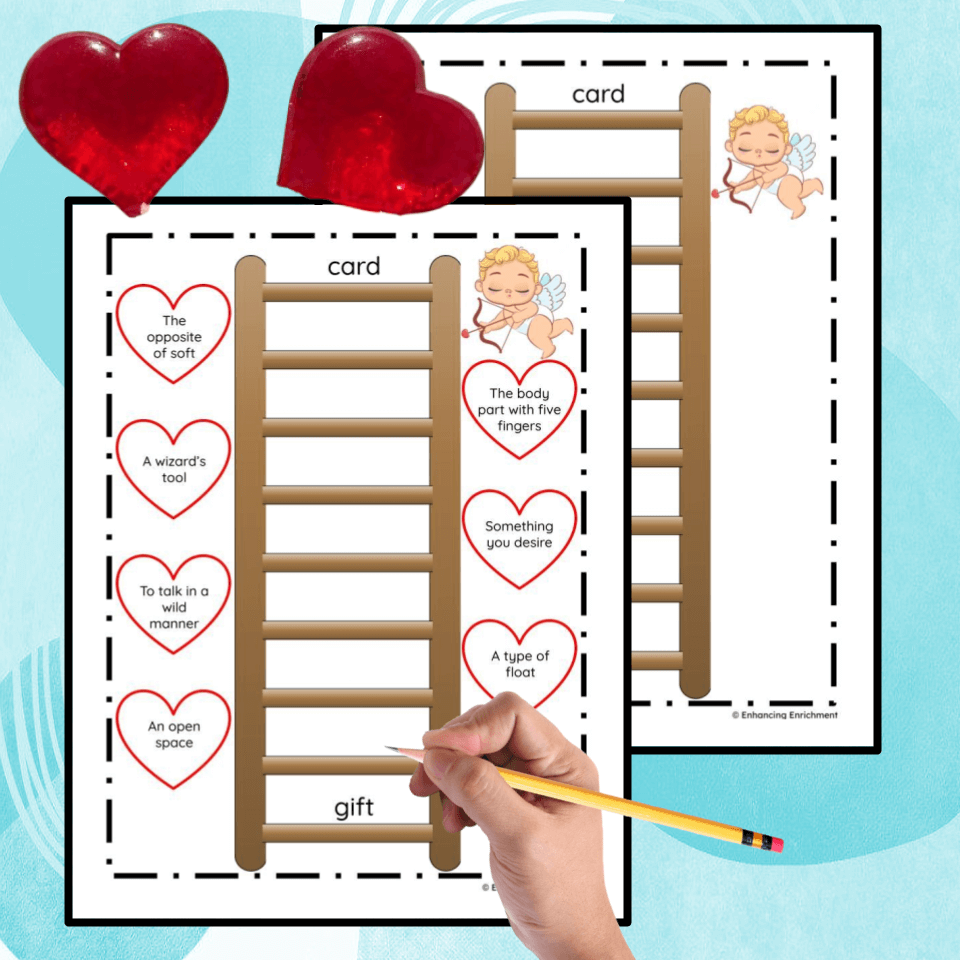
Valentine’s Day Word Ladders
Word Ladders challenge students to move from one word to another by changing only one letter at a time. Each step must create a real word (no proper nouns or abbreviations), and the start and end words must have the same number of letters.
You can create your own word ladders with this word ladder solver or use the ready-to-use Valentine’s Day Word Ladders (with or without clues). If you’re new to the concept, grab these free Antonym Word Ladders, or check out the Using Word Ladders post for tips and strategies.
Math Activities
- Math Logic Puzzles
- Cupid’s Arrows Math Mystery
- Create a Candy Store
- Plan a Valentine’s Day Party
Math Logic Puzzles
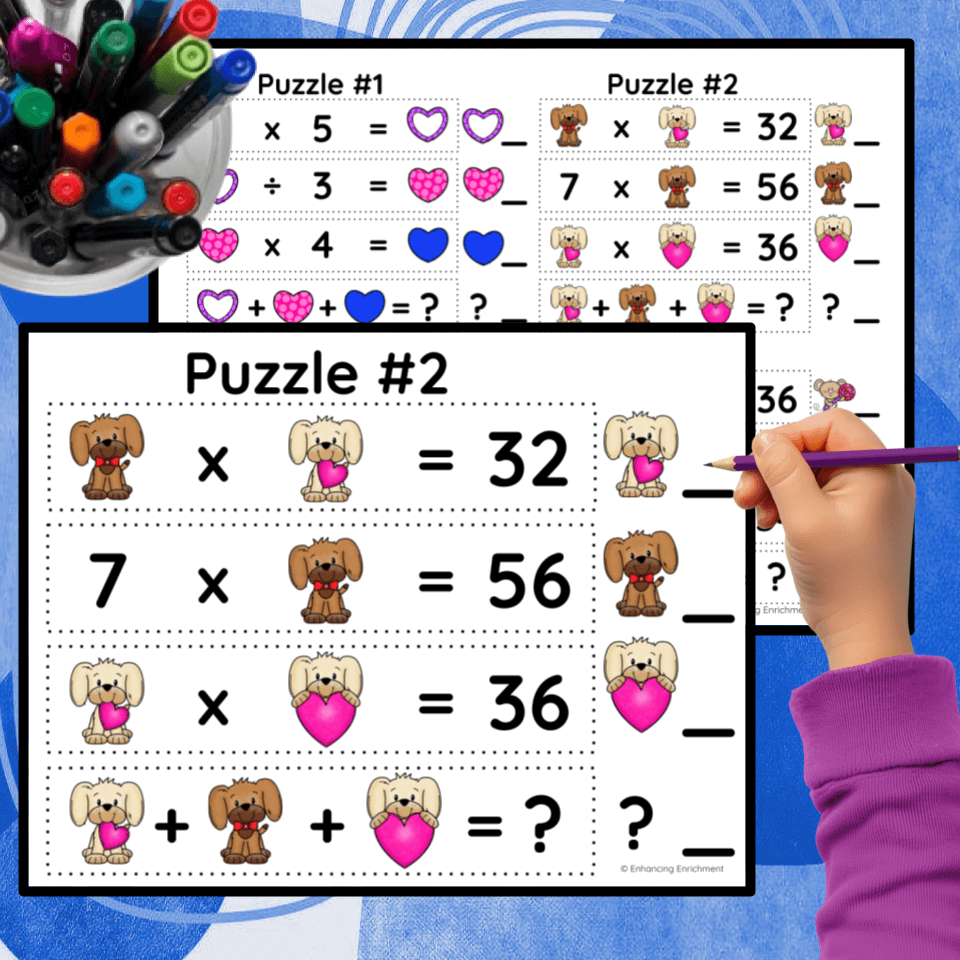
Math logic puzzles are a must-have for challenging high-achieving students. In these puzzles, symbols replace numbers, and students must use their knowledge of equations and operations to determine each symbol’s value. This type of problem-solving encourages critical thinking, strengthens algebraic reasoning, and provides a fun, hands-on way to deepen understanding. Learn more in the Using Math Logic Puzzles post.
These Valentine’s Day Multiplication and Division Logic Puzzles are designed to engage and challenge advanced math students. After students solve twelve puzzles where pictures take the place of numbers, they are then ready to extend their learning by designing their own logic puzzles to challenge their classmates. Students can create, solve, and self-assess their puzzles using the provided rubric.
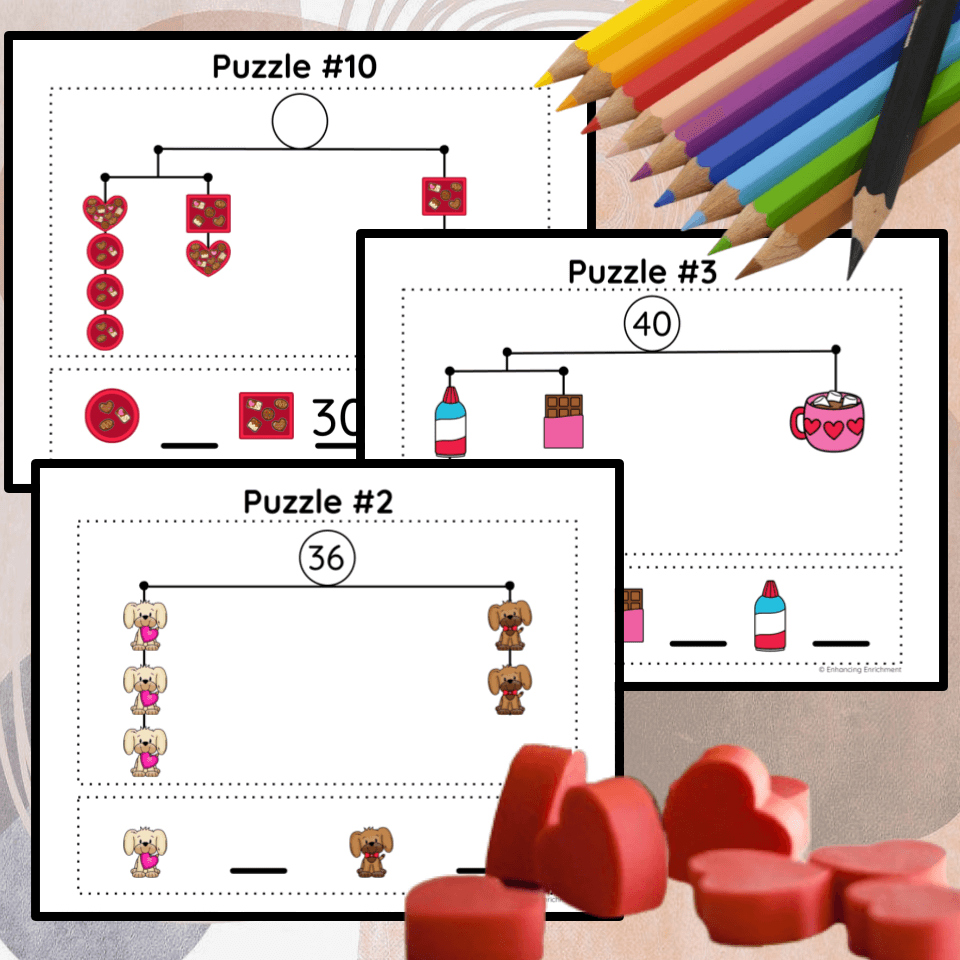
You can also introduce mobile puzzles, which help students explore balance and equality. Each mobile works like a hanging balance where every side must be perfectly even. Using given numbers or pictures, students determine missing values so the entire mobile stays balanced. Read more in the Using Mobile Balance Puzzles post, try some free emoji puzzles, or grab the Valentine’s Day version for your classroom.
Cupid’s Arrows Math Mystery
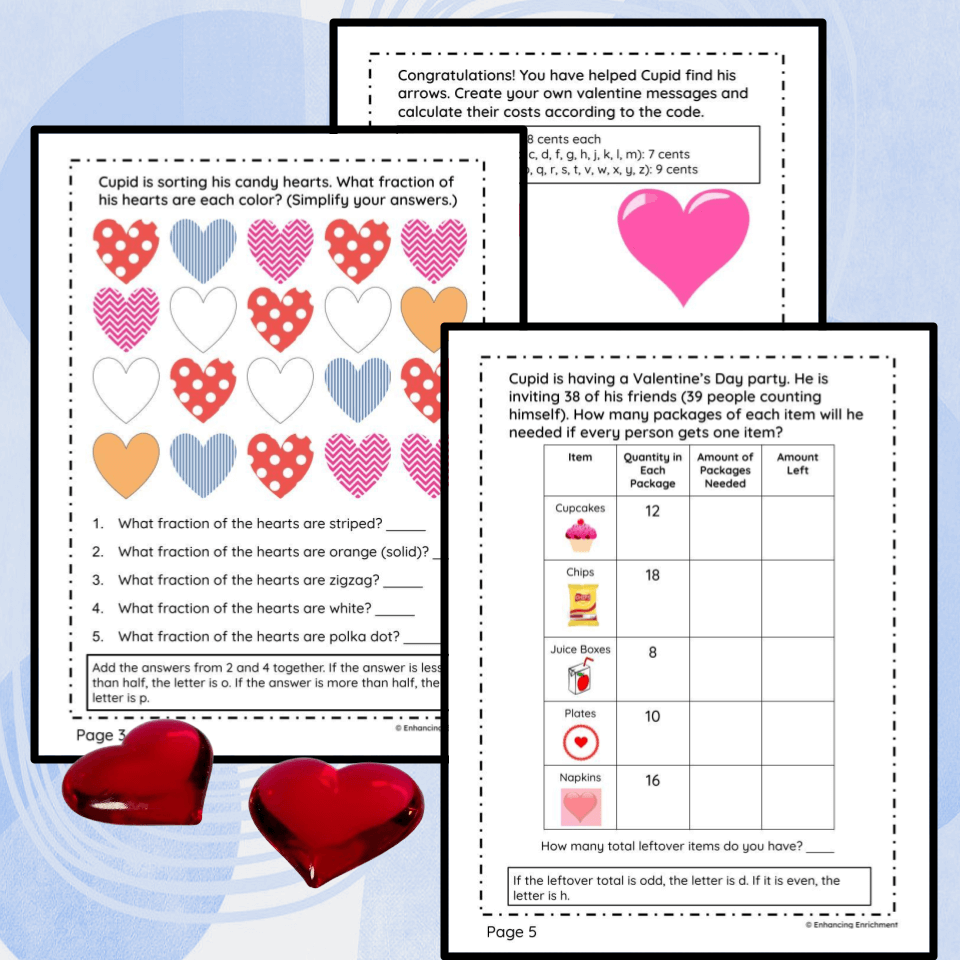
If you are looking for an easy-to-use math activity, Cupid’s Arrows Mystery Challenge isn’t your ordinary holiday worksheet. It is a fun adventure full of math puzzles and number challenges that will keep students engaged from start to finish. They will work through equations, follow clues, and use problem-solving skills to uncover the location of Cupid’s arrows, one letter at a time.
Students will multiply, divide, add decimals, and work with fractions. Two different versions are included to meet the needs of all learners, and a full answer key is provided for easy checking. Each puzzle leads to a clue to solve the mystery!
Create a Candy Store
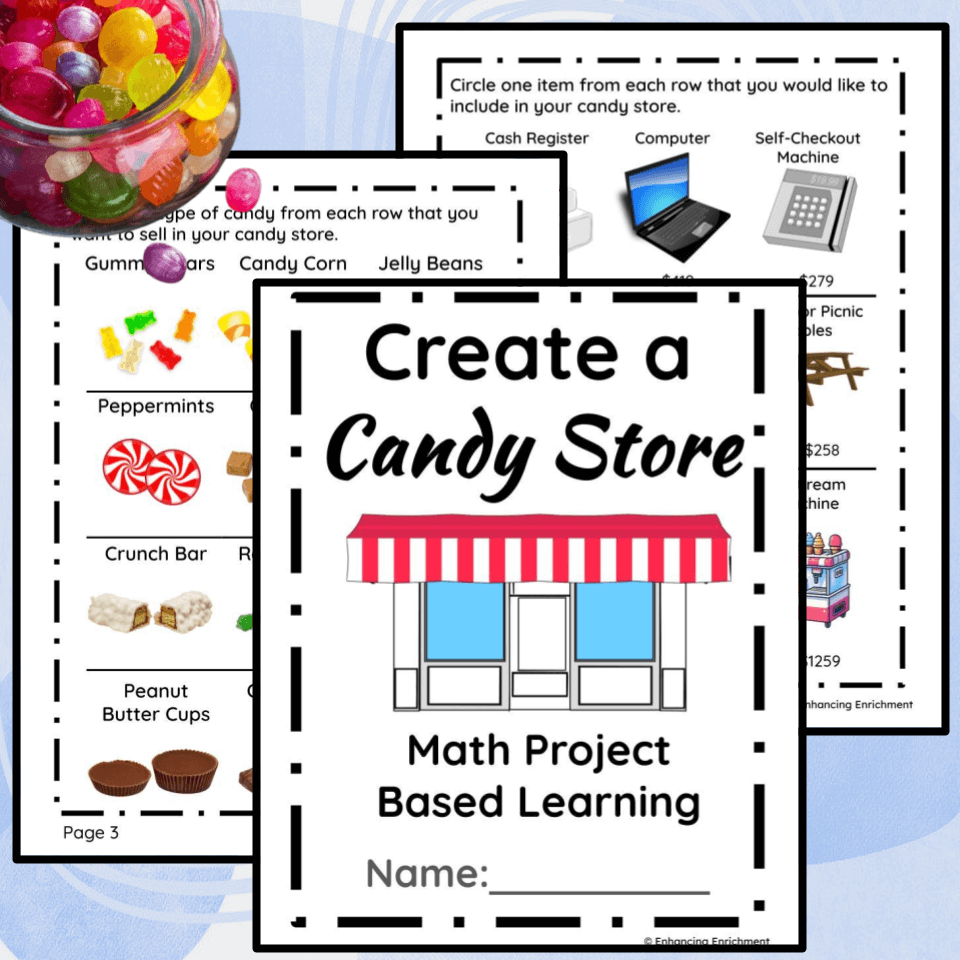
Explore area, perimeter, volume, surface area, decimals, and real-world problem-solving through the exciting challenge of designing and running a candy store.
In this project-based learning experience, students create a candy store from the ground up, starting with a cover page and custom store sign design. They choose their candy and store equipment, create a detailed floor plan, and determine area, perimeter, volume, and surface area throughout the design process. Students compare prices to determine the better buy, add decimals to calculate start up costs, and calculate sales needed to reach a set goal. The project wraps up with a persuasive component as students convince customers to visit their store, all supported by a complete answer key for easy implementation. Read more about the power of project-based learning for math enrichment in this post.
Plan a Valentine’s Day Party
Students can take on the role of event planners by organizing their own class Valentine’s Day party while working within a set budget. They must choose items from different categories such as decorations, snacks, drinks, and party favors, making careful decisions to stay within their spending limit. Have students use the online website of a local retail store (Walmart or Target work well). Then tell them that they are responsible for planning a party for the class. They will need food, supplies, and activities. Students should complete both a written schedule and an expense sheet.
This activity encourages critical thinking, math skills, and real-world problem solving as students calculate costs, compare options, and prioritize their choices. It also sparks creativity, as they can plan a fun and festive party while practicing important budgeting and decision-making skills. It’s even more fun if they are able to actually have the party at the end to celebrate their hard work!
STEM Activities
- Build a Candy Tower
- Launch an Arrow
- Heart Rate Science Lab
Candy Towers
Students can explore engineering and problem-solving with a fun STEM activity by building the tallest towers possible using gummy hearts or marshmallows. Working individually or in small groups, they use toothpicks to connect the candy and create stable structures, experimenting with different stacking techniques. For an added challenge, create a windstorm simulation with a fan or hair dryer to see if the towers continue to stand.
This hands-on challenge encourages creativity, critical thinking, and collaboration while introducing basic engineering design. Students can measure and record the heights of their towers, make adjustments, and try multiple designs, turning a simple activity into a meaningful problem-solving experience. You can read more about using STEM with gifted and talented students in this post.

Launch an Arrow
Students can explore engineering, physics, and problem-solving with an engaging STEM activity by designing and building an arrow, similar to a paper airplane, and launching it to see how far it can travel. Working individually or in small groups, students experiment with different folding techniques, shapes, and materials to create an arrow that is both aerodynamic and stable, testing how design choices affect distance and accuracy.
This hands-on challenge encourages creativity, critical thinking, and collaboration while introducing concepts such as force, motion, and air resistance. Students can measure and record the distance of each launch, revise their designs, and test multiple versions, following the engineering design process.
Heart Rate Science Lab
Students explore life science and data analysis with an engaging Heart Rate Science Lab that connects movement, emotions, and real-world observations. Working individually or in small groups, students measure their heart rate using a manual pulse check, placing two fingers on their wrist or neck, counting beats for 15 seconds, and multiplying by four to determine beats per minute. They record their heart rate during a variety of activities, such as resting, walking, jumping, deep breathing, or after experiencing different emotions, then graph their data to identify patterns and changes.
This hands-on investigation encourages scientific reasoning and critical thinking as students compare heart rate data across multiple activities, analyze which actions caused the greatest changes, and discuss why those changes occurred. Students draw conclusions using evidence, consider variables that may affect the results, and reflect on their findings, thereby developing scientific thinking through a simple experiment.

These Valentine’s Day activities are a great way to keep your students learning and having fun while celebrating the season. Whether they are creating, problem-solving, collaborating, or exploring hands-on challenges, each activity brings a little extra Valentine’s magic into your classroom. Choose the ideas that work best for your students and enjoy the creativity, excitement, and festive fun!
 Enhancing Enrichment
Leave a comment