You are back from winter break, and routines are still settling in. You are wondering what to do next while trying to keep your gifted and talented students thinking critically. These winter-themed activities are designed to engage and challenge your highest ability learners while requiring very little extra planning from you.
ELA Activities
- Set Your New Year’s Goals
- Winter Word Scramble Puzzles
- Snow Day Debate
Set Your New Year’s Goals
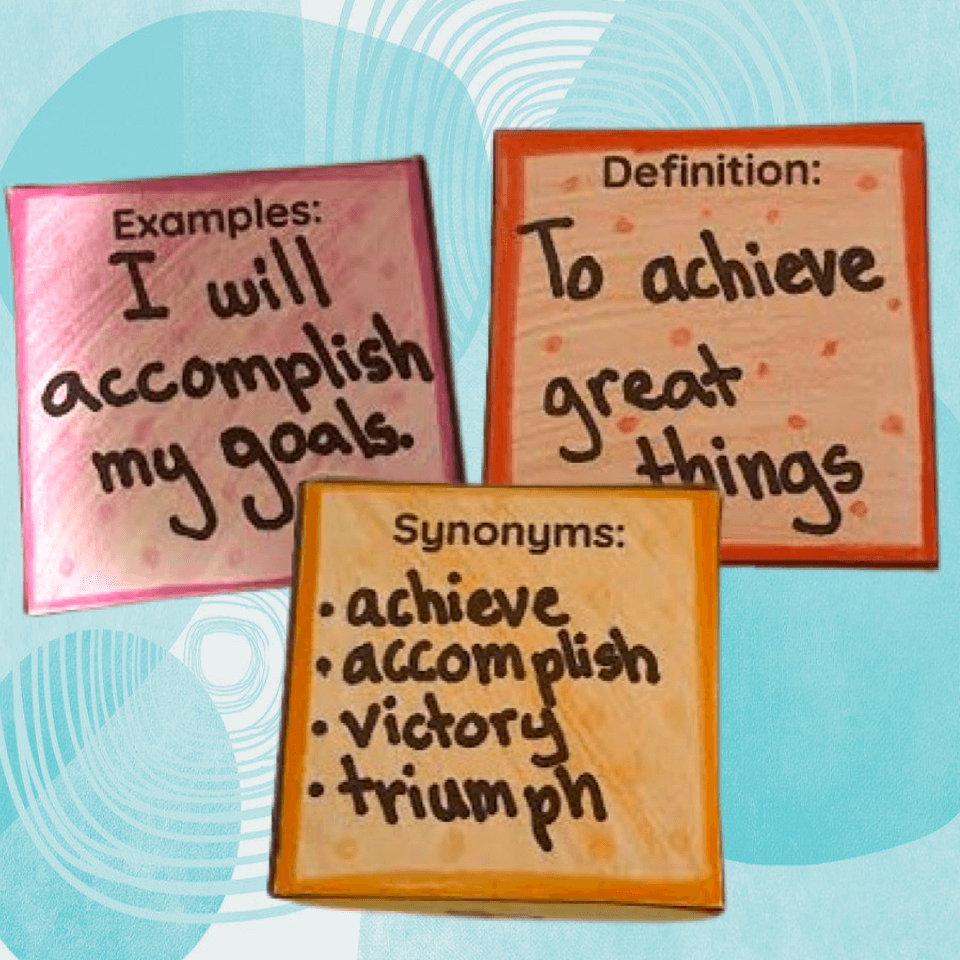
Start the new year off on the right foot by having students set their New Year’s resolutions with a Word of the Year cube. This activity gives students a chance to set meaningful goals and start the new year with clear intentions. Students begin by reflecting on the past year, thinking about what they learned, what challenges they faced, and what they want to focus on moving forward. They then choose one word that represents their goal or intention for the year, with support from example words, definitions, and a sample plan if needed.
Once they have selected their word, students fold and assemble a small 3D cube using the provided templates. This cube becomes a visual reminder of their word of the year, giving them a visual way to revisit their intention throughout the year.
Beyond goal setting, the activity encourages reflection, thoughtful decision-making, and a sense of ownership over personal growth, all while adding a creative, hands-on component. Students can then keep track of their progress all year with the monthly Habit Tracker.
Winter Word Scramble Puzzles
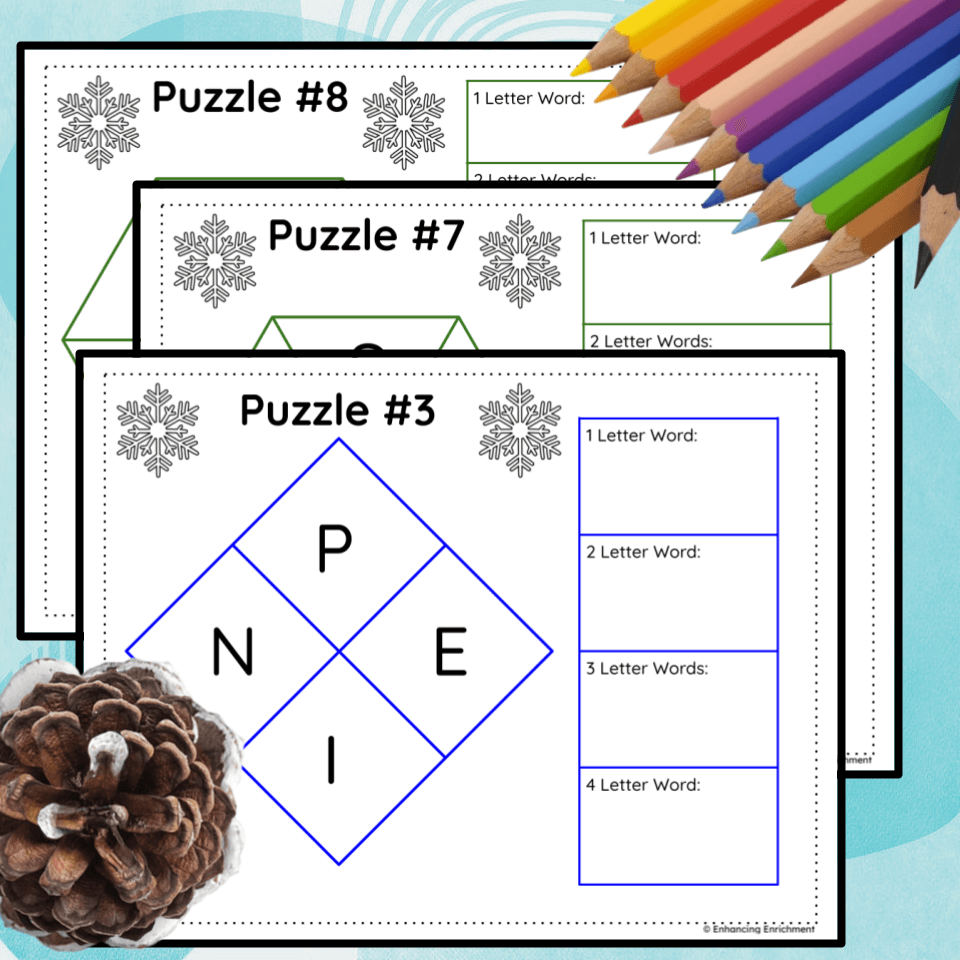
If you are looking for an activity for early finishers, check out these Winter Word Scramble Puzzles. In this activity, students are given a set of letters and challenged to rearrange them to form as many words as possible. The puzzles come in four, six, and seven-letter versions, allowing you to differentiate naturally and meet a range of ability levels within your gifted and talented group.
Students can work independently as an early finisher task, or you can turn the activity into a collaborative game for small groups or even the whole class. The open-ended format encourages flexible thinking, perseverance, and creative problem-solving, making it a meaningful and low-prep option for keeping students productively engaged during the winter months.
Snow Day Debate
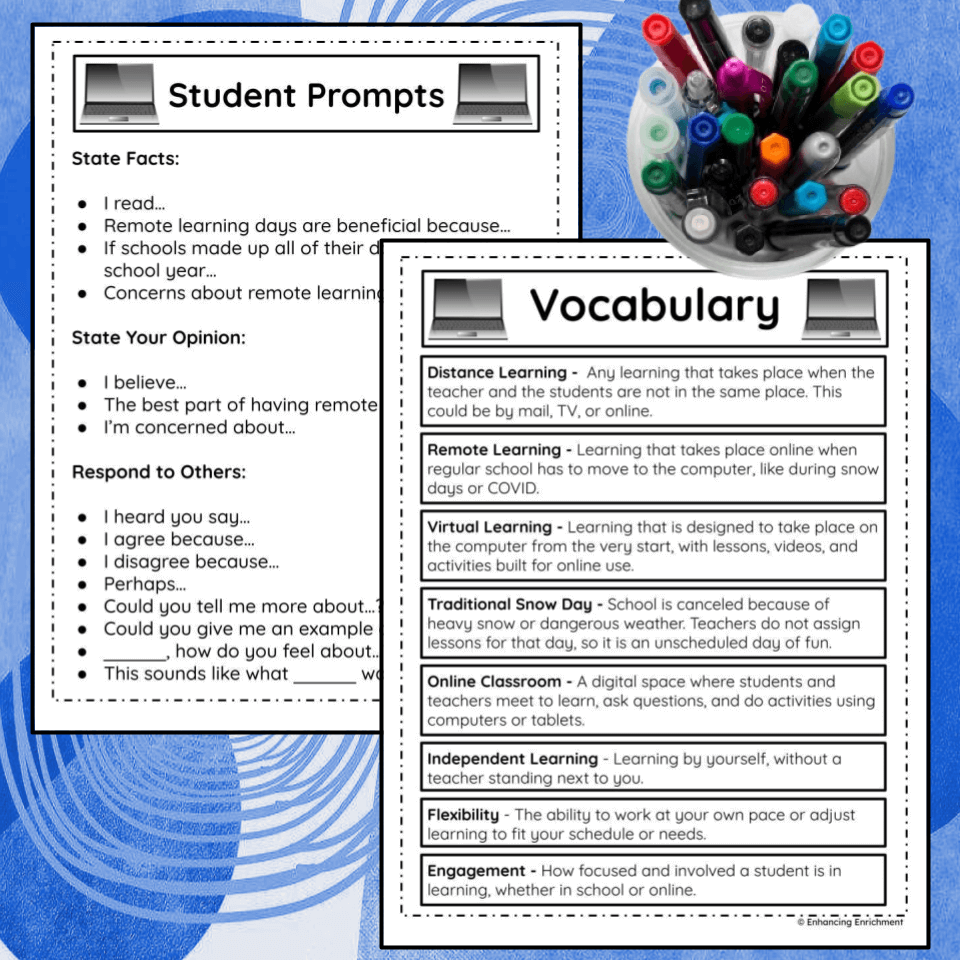
Engage students in meaningful debate with this Virtual Learning Debate. Should there be remote learning days? Should kids learn at home from their computers instead of enjoying a traditional snow day? What are the benefits? What are the concerns? In this Socratic Seminar, fourth, fifth, and sixth grade students will read all about the pros and cons of remote learning days and form an opinion. They will then cite evidence from the text to discuss and debate their points of view and listen to the points of view of their classmates.
The typical format of a Socratic Seminar involves two circles. The inner circle participates in the discussion. The outer circle keeps track of the interactions between the group members. Students must think critically about the topic in order to analyze information on both sides of the issue. They must also be ready to respond to students who have opposing viewpoints. Read more about Socratic Seminar and grab a free planner in this blog post.
Math Activities
- Winter Logic Puzzles
- Run an Ice Rink
- Which One Doesn’t Belong?
Winter Logic Puzzles
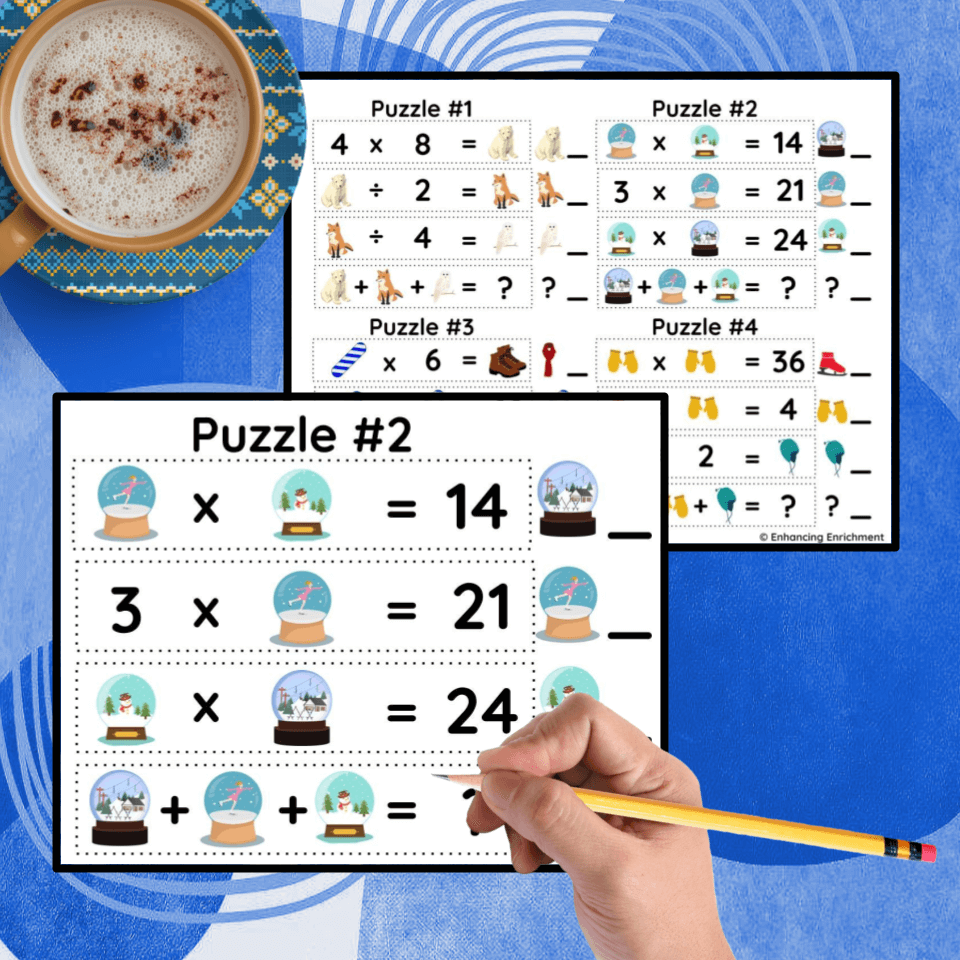
Math logic puzzles are a must-have for challenging high-achieving students. In these puzzles, symbols replace numbers, and students must use their knowledge of equations and operations to determine each symbol’s value. This type of problem-solving encourages critical thinking, strengthens algebraic reasoning, and provides a fun, hands-on way to deepen understanding. Learn more in the Using Math Logic Puzzles post.
These Winter Multiplication and Division Logic Puzzles are designed to engage and challenge advanced math students. After students solve twelve puzzles where pictures take the place of numbers, they are then ready to extend their learning by designing their own logic puzzles to challenge their classmates. Students can create, solve, and self-assess their puzzles using the provided rubric.
Need something more challenging? These Winter Logic Puzzles focus on fraction multiplication and division.
Run an Ice Rink Math PBL
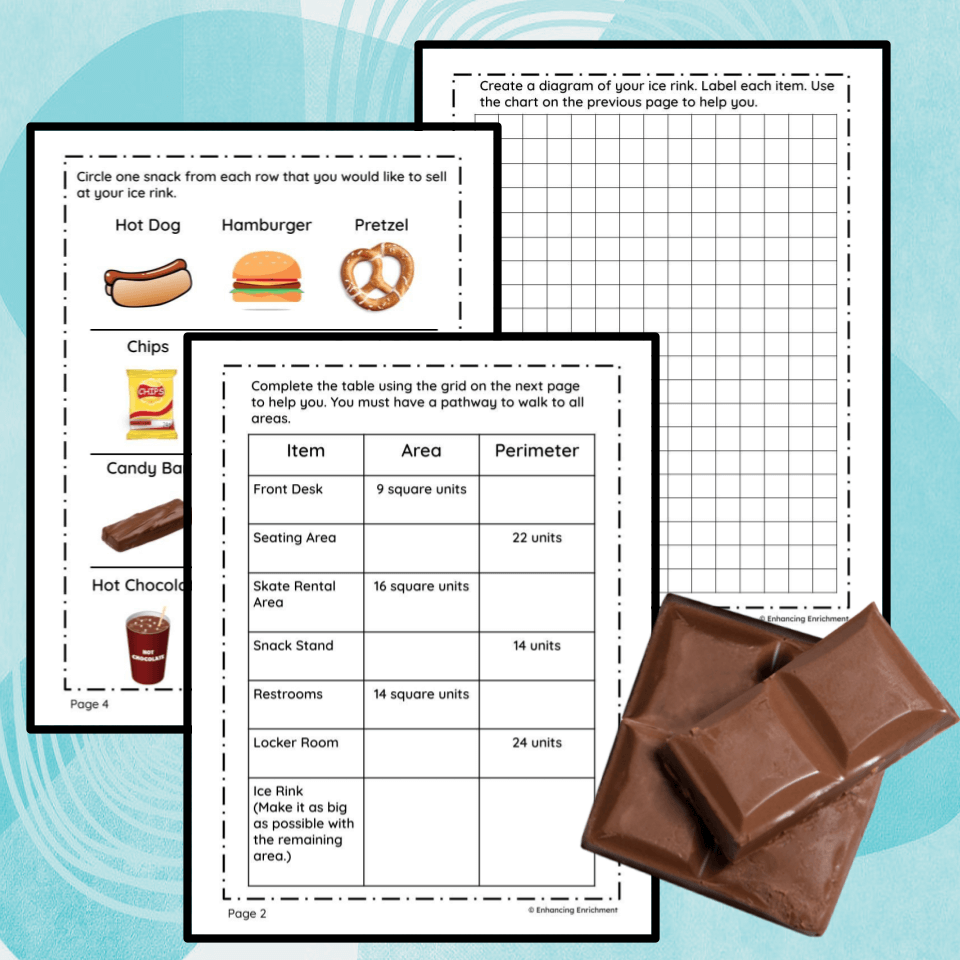
Make learning meaningful with project-based learning when students run their own ice rinks! As they plan and design their rink, they use math skills like perimeter, area, decimals, and basic operations to solve problems. Students make choices about the layout of their rink, which helps them think creatively while using math in a real-life situation.
This activity works well as a review or an extra challenge for early finishers. With two versions included, it is easy to adjust for different learners while keeping students engaged and thinking deeply about math. Read more about Math Project-Based Learning here.
Which One Doesn’t Belong?
Are you looking for a critical-thinking math activity that engages and challenges your gifted and talented students? “Which One Doesn’t Belong?” (WODB) is a perfect math routine for your classroom. Everyone can participate and provide different answers, yet all of the answers can be correct!
Adding a winter theme helps make this routine fun and easy for students to connect with. Students might look at pictures showing different numbers of snowflakes, graphs of winter temperatures, or the heights of ski slopes. Each choice can be the “odd one out” for a different reason, and students explain their thinking using math words. After practicing with examples, students can use the free template to create their own winter-themed WODB sets, helping them build confidence, creativity, and strong math thinking skills.

STEM Activities
- Marshmallow Catapult
- Sled and Slope STEM Challenge
- Ice Cube Insulation Challenge
Marshmallow Catapult
Students will put their engineering skills to the test with the Catapult STEM Challenge! It is a great way to add some fun while still addressing science standards. Students will use the engineering design process to ask, imagine, plan, create, test, improve, and reflect. Read all about it in the Catapult STEM blog.

Sled and Slope STEM Challenge
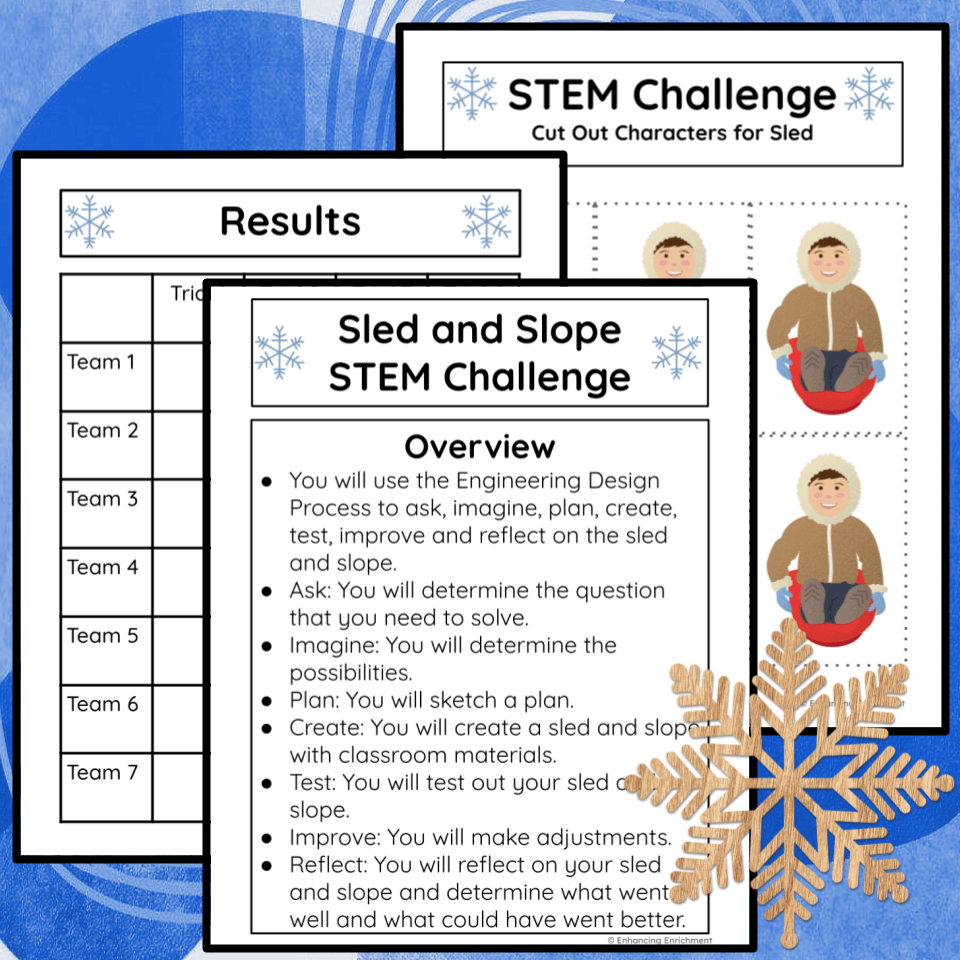
Celebrate the Winter Olympics with this fun Sled and Slope STEM challenge. Your students will love putting their creativity to the test as they design, build, and race their own sleds down a slope. Along the way, they’ll be following the engineering design process (ask, imagine, plan, create, test, improve, and reflect) without even realizing how much science and math they’re practicing.
Ice Cube Insulation Challenge
To set up an ice cube insulation STEM challenge, give each student or group an ice cube and a variety of materials such as aluminum foil, paper, cloth, or plastic wrap. Ask them to design a way to wrap their ice cube so it melts as slowly as possible. Be sure to include one unwrapped ice cube as a control so students can compare how much the different materials slow the melting. Students can place all the ice cubes in the same location and check them every few minutes, recording their observations and results.
This hands-on activity helps students learn about heat transfer, testing ideas, and making predictions. It also builds problem-solving skills, creativity, and teamwork while showing how science works in the real world.
Hopefully, you found some fun winter activities to challenge your gifted and talented students. These activities help students think, create, and explore while making math, reading, and science exciting. With a little planning, winter can be a season full of learning, curiosity, and hands-on fun for your highest-ability students.
 Enhancing Enrichment
Leave a comment