
You’re introducing a new concept to your math enrichment group when the inevitable question is asked, “When am I ever going to use this in real life?” Math concepts are often abstract and not relevant, even to our high-achieving and gifted math students. Project-based learning can solve this problem. It allows students to see how math concepts are used in everyday situations.
What is Project-Based Learning?
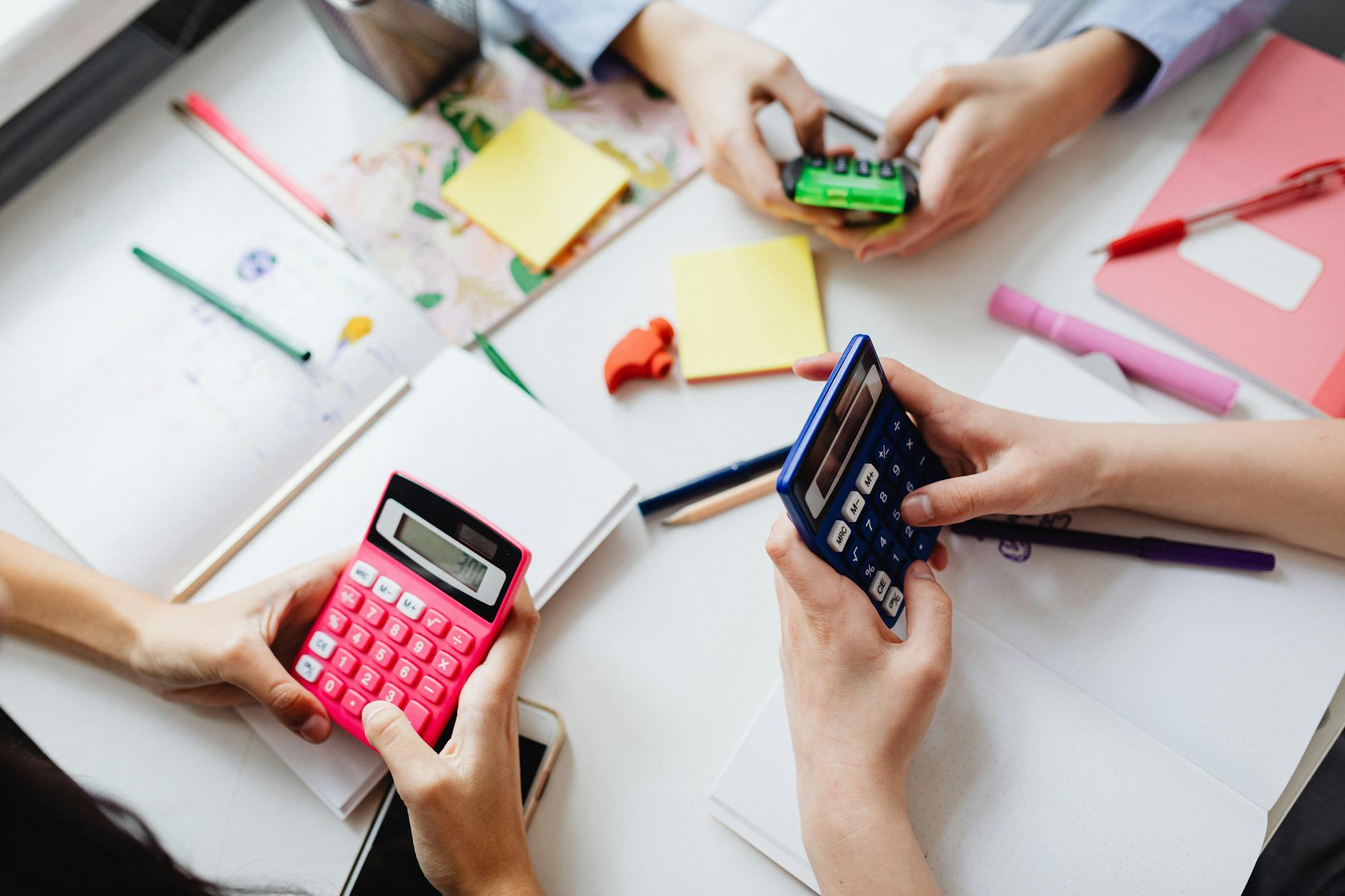
Project-based learning (PBL) is an instructional approach where students actively investigate real-world problems and challenges. It encourages collaboration, critical thinking, and creativity as students work together to find solutions. The learning process culminates in a meaningful project or presentation, often shared with an authentic audience, making the experience more relevant and impactful. Check out this blog post to learn more about implementing project-based learning.
PBL for Math Enrichment
Traditional math enrichment often focuses on acceleration. It involves more advanced problems at a faster pace. While this approach has value, it doesn’t always reach students who crave context or creativity and leaves these students questioning why they are learning these advanced concepts and when they will ever use them.
PBL allows students to see how math concepts are used in real-world contexts, have choice and creativity in their learning, collaborate and problem-solve with their peers, and develop a deeper understanding of math concepts.
How To Use Math PBL
- Choose Math Standards
- Apply to a Real-World Situation
- Allow for Student Choice
- Plan Collaboration and Discussion Opportunities
- Final Product or Presentation
Choose Math Standards
While it’s tempting to start with a fun idea—“Wouldn’t it be great to design a taco truck?”—purposeful project-based learning begins with clear learning objectives. Effective enrichment isn’t about rushing ahead to the next concept; it’s about going deeper with the standards students are already expected to master.
Start by identifying the standard you want to focus on, then build a real-world scenario around it. Teaching fractions? A pizza restaurant is a perfect fit. Introducing angles? Design a mini-golf course. One of the biggest strengths of PBL is its flexibility. You can easily integrate multiple standards into a single project, giving students the opportunity to reinforce previously learned skills while exploring new ones in a meaningful context.
Apply to a Real-World Situation
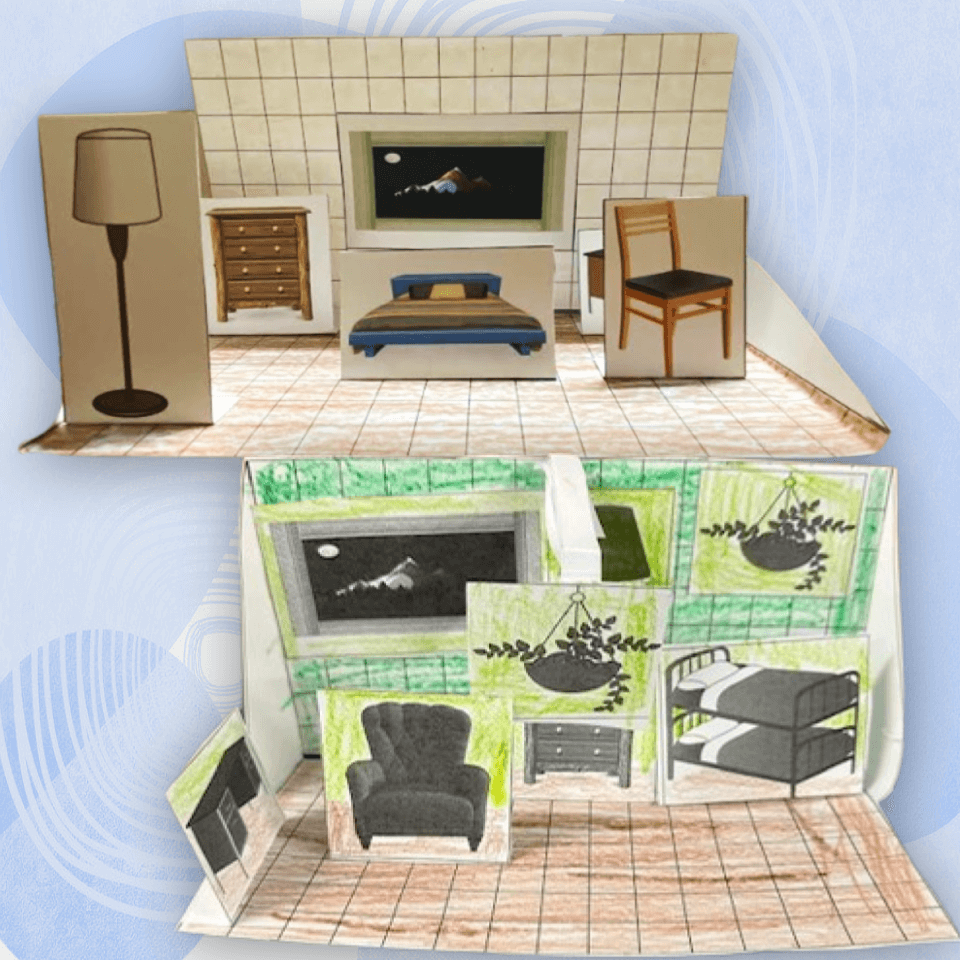
The possibilities are endless when choosing a real-world situation. This is where it is fun to consider the interests of the students in your class. Are your students really into football? Create a situation where they determine the fraction of different players on the team. Do they love design? Use decimals to redesign a room while sticking to a budget. Students are much more engaged when math is focused on their interests.
Allow for Student Choice
Student choice in project-based learning is what sets it apart from other activities. Even if it’s just choosing what to include that sets one student’s project apart from another, students have more buy-in when they get to make choices.
Plan Collaboration and Discussion Opportunities
When students explain their reasoning aloud or listen to others, they clarify their own thinking and deepen their understanding. This can be accomplished by having students work together to complete a project or by just taking the time to have students share their decision-making process with a peer.

Final Product or Presentation
Project-based learning concludes with a final product or presentation that can be shared with peers of parents. In math PBL this might look like a grocery budget for a family or a 3D model of a gingerbread house. Students can be assessed on both their mathematical applications and their ability to share their understanding using mathematical reasoning.
Math PBL in Action
You can plan a math PBL with limited time and materials. Let’s say you want to plan a decimal enrichment activity. The standards that you want to focus on are adding and subtracting decimals. The real-world application is grocery store shopping for the family because this is something that students can easily relate to. You want to provide student choice, but you also want to set some parameters so you bring in grocery store ads from your local grocery store.
Students must work with a partner to “purchase” a food from each food group to feed a family of five without exceeding a budget of $100.00. Their final purchases are cut out from the ads and glued onto a paper plate to display to their peers and families. This simple yet engaging project allows students to apply decimal skills in a meaningful context while practicing collaboration, budgeting, and real-life decision-making.
Other Easy-to-Implement Ideas
- Fractions – Create a pizza with different fractional amounts of each topping. Record both the fractional part of the whole and the simplified fractions for each topping.
- Volume – Each group receives a large piece of paper to design a box that can hold the greatest number of cubes. Measure and record the dimensions of your box.
- Area and Perimeter – Measure your classroom and the furniture in it. Create a new classroom layout on graph paper that leaves the most open floor space.
- Data – Have your class brainstorm ideas for a class motto. Once everyone has contributed, hold a vote to select their favorite. Collect and graph the voting results to analyze the data and discuss the findings.
Math PBL Done for You
Are you short on time? These math PBLs include a variety of math concepts and are ready for you to print and use.
Design a 3D House
Address decimals, money, multiplication, division, volume, angles, and surface area by designing and building a 3D house.
Students use square, rectangle, and triangle pieces to construct a three-dimensional haunted house, gingerbread house, or fairy house. They will then maximize their budgets to create the best decorated houses. After completion, students will calculate the angles of the roof, the volume of the house, and the total surface area. They will have so much fun they won’t even notice that they are applying advanced math concepts!

Create a Parade Float
Address decimal subtraction, measurement, volume, surface area, area, and perimeter when students create their own parade floats.
Using the provided materials, students will design and construct a three-dimensional 4th of July or Thanksgiving parade float. With a set budget, they’ll work to create the most impressive, well-decorated float possible while making strategic decisions along the way. Once their floats are complete, students will calculate the volume and total surface area of their creations. Add straws and pop bottle lids to create real movable floats for a class parade!

Plan a Carnival
Explore perimeter, area, decimals, fractions, graphs, and symmetry – all wrapped up in the excitement of a carnival!
Students will select carnival supplies and “purchase” items within a set budget. They’ll design a carnival layout using fractions, calculate area and perimeter, and create a volunteer schedule based on elapsed time. Throughout the project, students will apply multiple math concepts in a fun, real-world context that brings learning to life.

Bringing Math to Life Through Project-Based Learning
Project-based learning helps make math more than just abstract ideas. When students work on real-world problems and get to make choices and collaborate, they understand the concepts better and see why it matters. This approach is especially helpful for students who often ask, “When will I ever use this?” Whether you have a little time or want a ready-made project, using PBL in your math enrichment can make learning fun and meaningful.
Start with clear goals, try out a simple project, and watch your students get excited about applying math in creative ways.
 Enhancing Enrichment
Leave a comment