
Fractions are such a difficult concept for some students to grasp. They must understand the concept of a fraction, be able to compare fractions with different denominators, convert fractions to add and subtract, and simplify fractions when multiplying and dividing. As a teacher, it is easy to get overwhelmed with small group intervention instruction. We often forget about the students who are able to conceptualize fractions and are ready to move on.
So, how do you extend learning for gifted and talented students and high achievers without moving onto a new concept altogether? How do you provide enrichment with limited instructional time?

Here are some ways that students can extend their learning and understand fractions on a deeper level.
Compare Fractions
Once students understand that a fraction represents a part of a whole and are able to split parts of a whole to represent the fraction, it is time to compare fractions. It is helpful to start on a number line. Students can be given fractions with the same numerator and different denominators. They can put them in order from least to greatest. When students are able to compare fractions with the same numerator, they can then move on to comparing fractions with different numerators and denominators. When they are great at comparing fractions, they can also be given decimals and percentages to add to the comparison. Here are some games to help students with this progression.
Comparison War
The game is played like War. Split the cards evenly between players. Each player turns over the top card. The largest amount takes the cards. If there is a tie, each player turns over their next top card. The winning amount takes all of the cards. Continue playing until one player has all of the cards.
Matching Pairs
Only use cards that have an equivalent match. Place all of the matches face down in rows. Players take turns drawing two cards. If the cards are equivalent, they get to keep both cards. Play continues until all of the cards are gone. The player with the most cards at the end is the winner.

Go Fish
Only use cards that have an equivalent match. Players each start with five cards. They take turns asking another player for a card that is equivalent to a card that they are holding. If the person does not have a match, they tell the player to “Go Fish.” The player draws a card from the pile of extra cards to try to make a match.
Ordering Race
Each player is dealt five cards. They put their cards in order from least to greatest. The first player to correctly arrange their cards gets a point. Play continues until a player gets ten points.
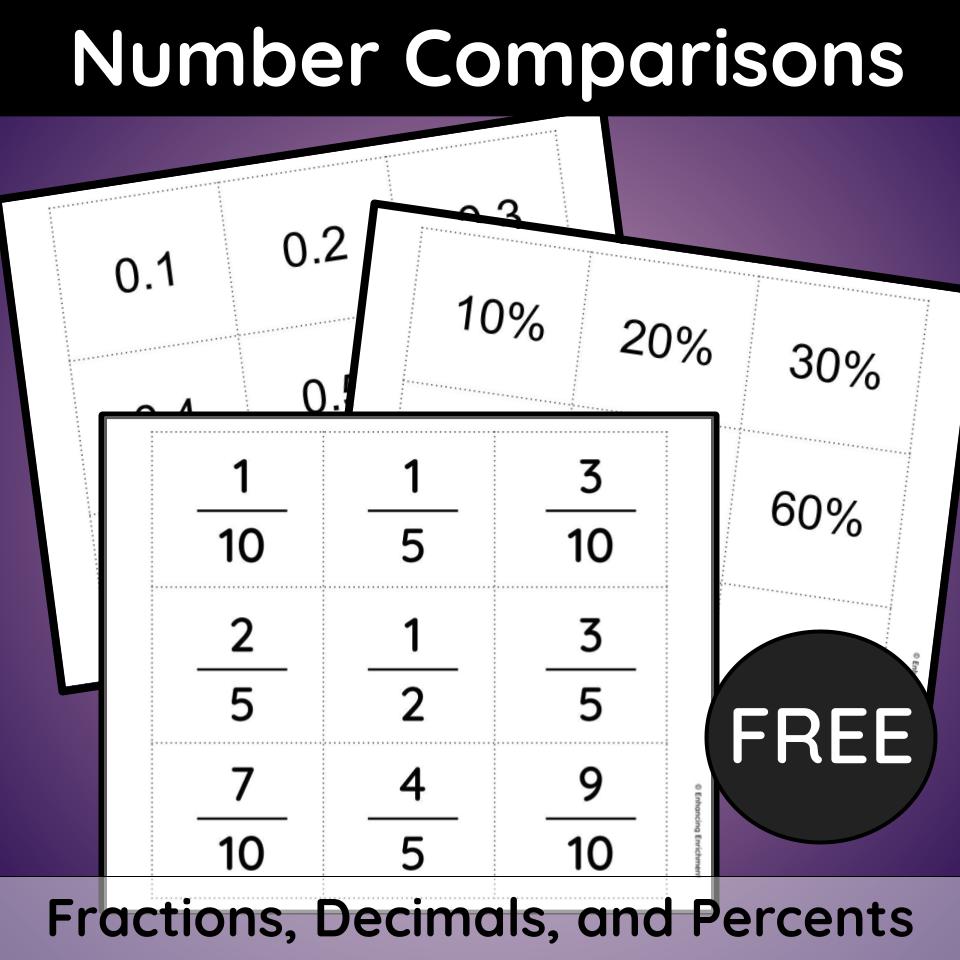
Download the directions and cards in the Free Resource Library.
Which One Doesn’t Belong?
Students can compare a variety of fractions in the “Which One Doesn’t Belong?” math routine. In this activity, they will identify which fraction is not like the others and describe why it is unique using mathematical vocabulary and reasoning. Students are then challenged to find a reason why each representation is unlike the others. This works best with a variety of different fractions, including visual representations. You can read more about WODB in this post.

Add and Subtract Fractions
Students should practice adding and subtracting fractions with like denominators first. Then, they can progress to adding and subtracting fractions with unlike denominators by finding a common denominator. Once students understand the concept, they can again move on to more advanced activities.
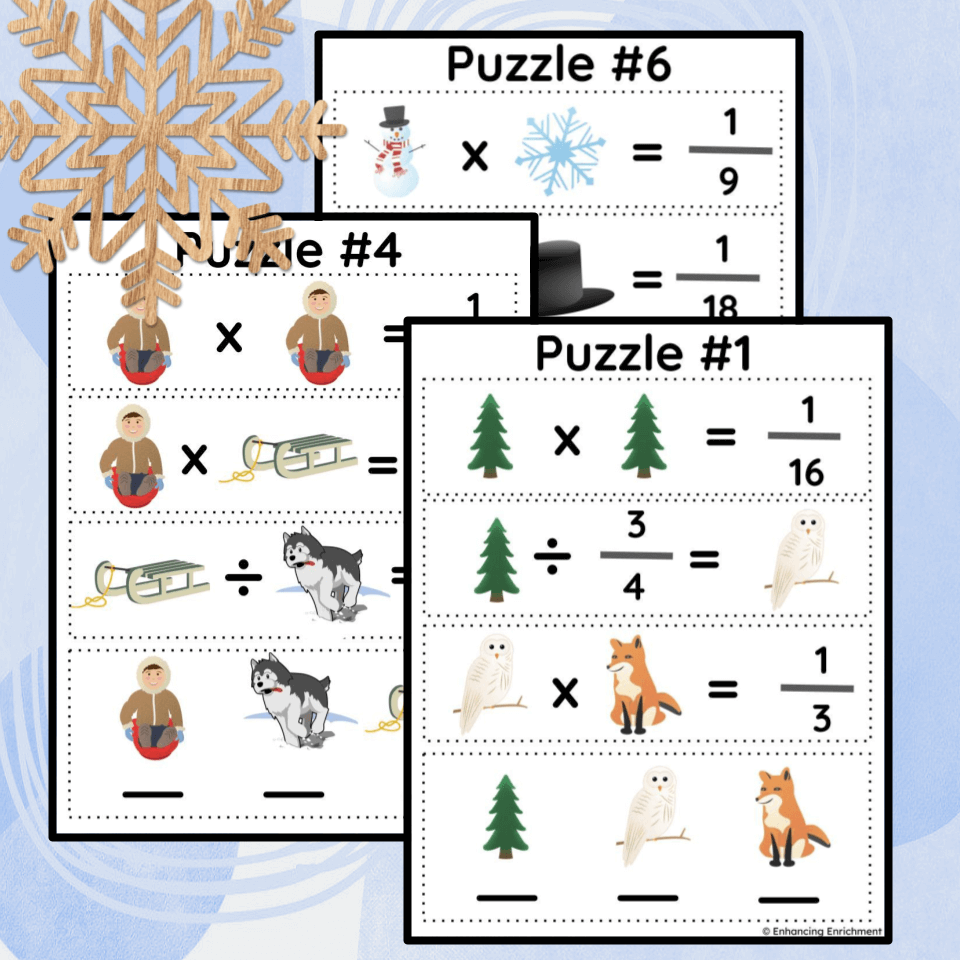
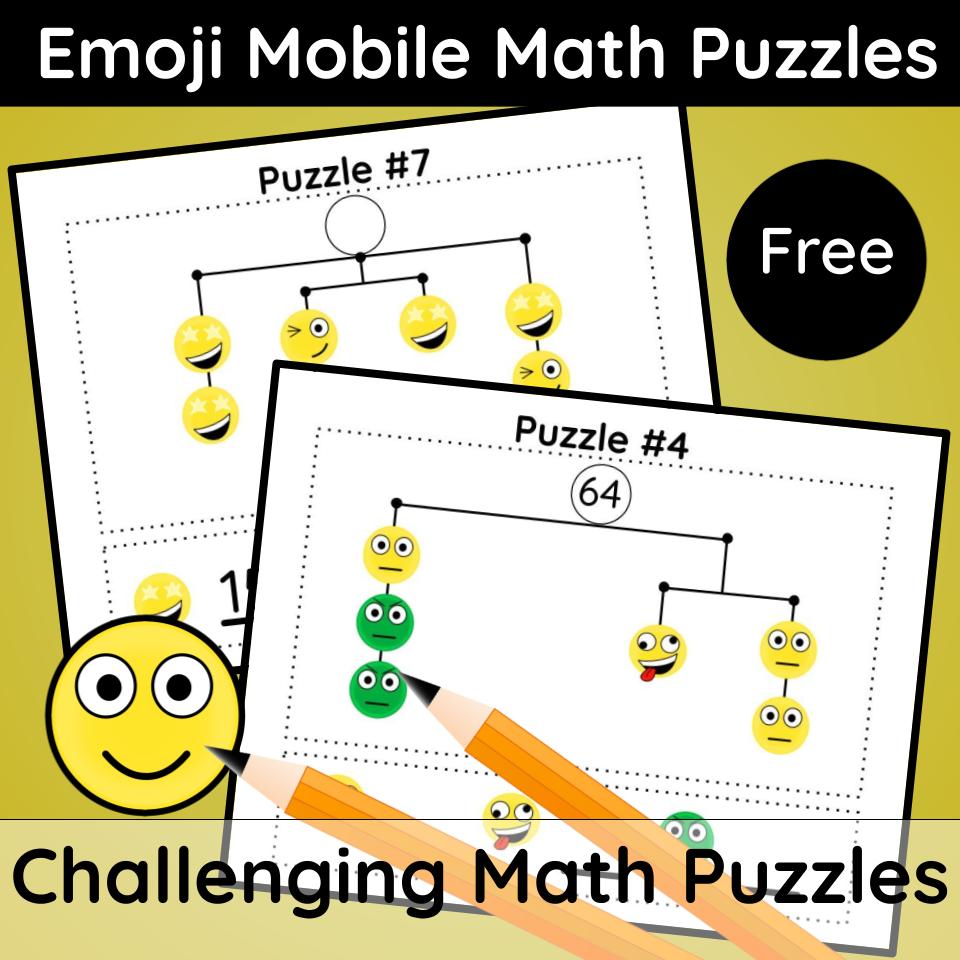
Math logic puzzles require students to use what they know about mathematical concepts. In these puzzles, pictures take the place of numbers. Students will need to use algebraic thinking to solve problems in an order that they may not normally use. When solving fraction logic problems, students will need to be able to convert fractions flexibly into mixed numbers and equivalent fractions. You can read more about using math logic puzzles in this post.

Students can stay engaged with fraction problems by solving them in a fun way. In this math mystery, students will add and subtract fractions with unlike denominators in twelve different story problems. The answer to each problem will lead to a clue that will help eliminate suspects. Students will determine the suspect, the suspect’s age, the type of candy stolen, and the suspect’s location to solve the mystery.

Multiply and Divide Fractions
Multiplication of fractions should be introduced by showing that multiplying a fraction by a whole number is repeated addition. Then, students learn how to multiply two fractions by multiplying the numerators and denominators.
Mobile balance puzzles are a great way to practice multiplication and division of fractions while using critical thinking. To solve a mobile balance puzzle, you may use the number at the top to determine the value of each side. If the mobile puzzle has two sides, divide the number at the top by two to get the value of each side. If the puzzle has three sides, divide the number at the top by three to get the value of each side. Each side must be balanced. You can read more about using mobile puzzles in this post.

As students strengthen their understanding of fraction multiplication and division, they benefit from opportunities that push their thinking even further. These Fraction Multiplication and Division Logic Puzzles challenge gifted learners and early finishers to apply fraction skills through complex, brain-teasing problem solving. With varying levels of difficulty, students analyze patterns, navigate multiple operations, and use critical thinking to determine solutions. The included templates also invite students to design their own logic puzzles, extending their learning while encouraging creativity and deeper mathematical reasoning.
Applying Fractions in Real-World Contexts
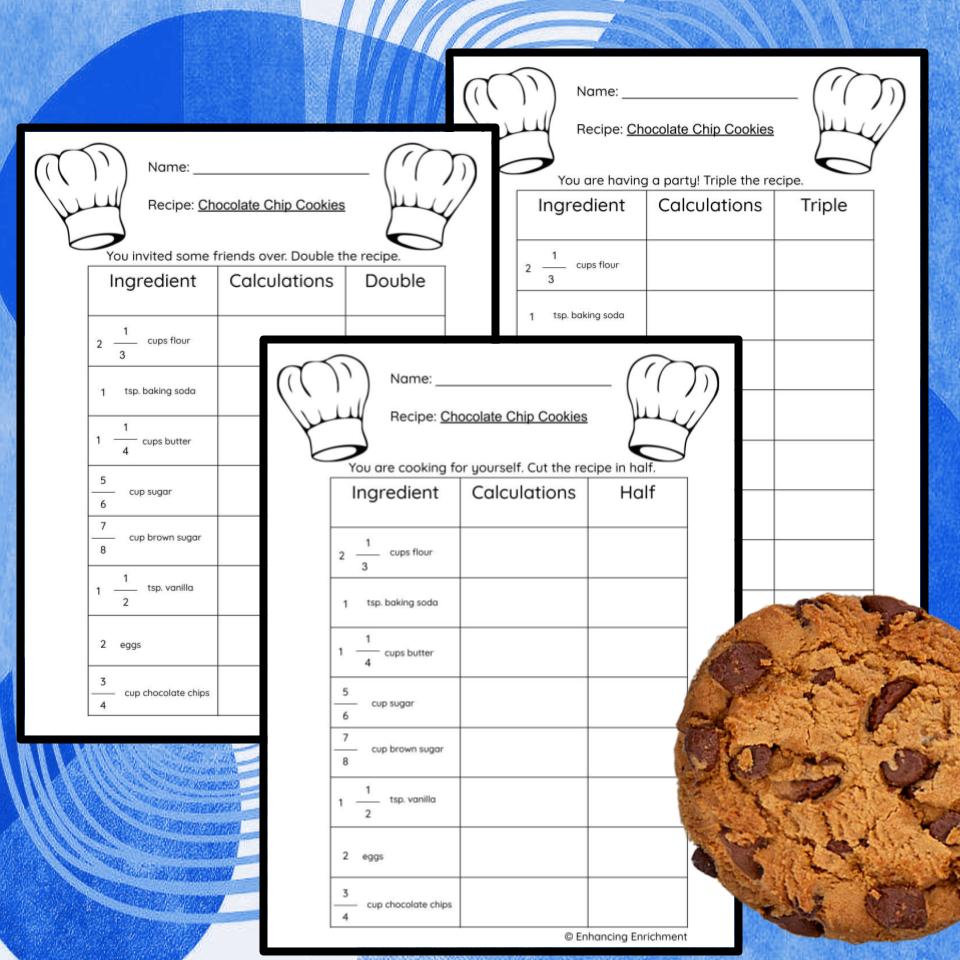
As students become more comfortable with fractions, they should apply their knowledge to real-world problems. In What’s Cooking? students will demonstrate their understanding of fractions in a real-world cooking context. Students will multiply and divide a variety of fractions to halve, double, and triple ingredients in recipes. They will then simplify the fraction into its reduced form. This concept can be used with any recipe to convert fractions flexibly.
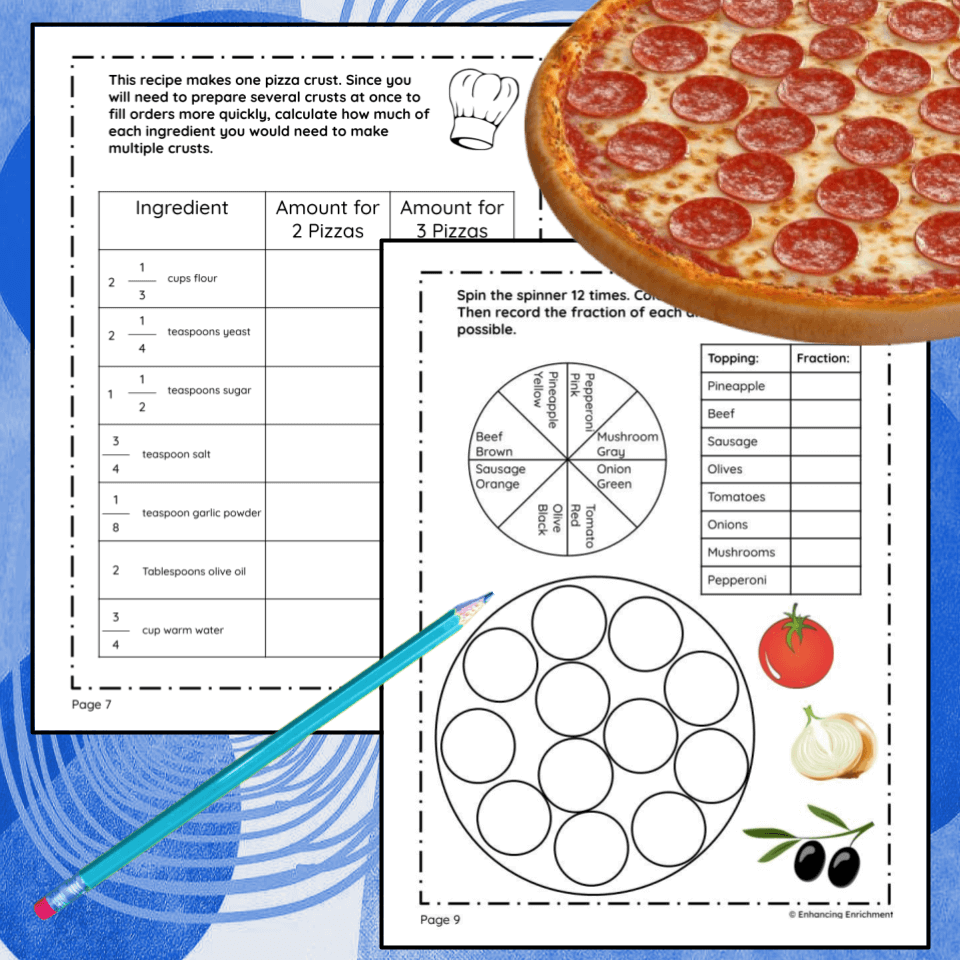
As students continue to apply their knowledge of fractions in meaningful ways, they benefit from opportunities that connect math to real-life experiences. In the Pizza Shop project, students take on the role of restaurant owners and use fraction concepts in an authentic business setting. They will determine pizza portions, double and triple recipes, calculate coupon discounts, and make decisions about toppings and pricing, all while strengthening their understanding of fraction components. Along the way, students also design their restaurant layout, encouraging creativity alongside critical thinking and problem-solving. This engaging project offers gifted and high-achieving third and fourth graders a practical, hands-on way to deepen their fraction skills while seeing how math supports real-world decision-making.
Extending fraction learning for gifted and high-achieving students doesn’t have to mean moving on to a new concept entirely. By deepening their understanding through comparison, problem-solving, and real-world applications, students can engage with fractions in more meaningful ways.
 Enhancing Enrichment
Leave a comment