
Are you looking for a quick warm-up to engage your reading enrichment students? Are you trying to address a large number of standards but are short on time? Implementing math warm-ups worked so well that I decided literacy warm-ups are worth a try. These quick activities are a great way to start your lesson off on the right foot and focus on a variety of English language arts skills and concepts.

Literacy
Get students excited about reading with these quick literacy warm-ups.
- First Chapter
- Book Talks
- Wordless Books
First Chapter
Tease a new book by reading just the first chapter or an extremely interesting part of the book. This works particularly well if the part you read out loud ends with a cliffhanger. Students that are interested in finding out what happens can borrow the book and read the whole thing!
Book Talks
When students complete a great book, encourage them to give a book talk to the class. Book talks should persuade others to read the book. They can include a brief summary, favorite parts, and personal connections to the book.
Wordless Books
Improve writing skills by sharing the process with students. Present a wordless book and have students help generate descriptive details and dialogue to add depth to the pictures. Add the words on sticky notes or on separate pieces of paper tucked into each page. Write a few pages a day until the book is complete.
Vocabulary
Expand students’ vocabulary with a short activity at the beginning of class.
- Twenty Questions
- Hexagonal Thinking
- Word Cloud
Twenty Questions
Think of a vocabulary word that has been used in class or fits the current unit. Students take turns asking yes or no questions to narrow down the possibilities. They get twenty chances to figure out the word. If this is too difficult, present a word bank and let them know that the word is one of the choices.
Hexagonal Thinking
Hexagonal thinking is a way to form connections between concepts. Students can each be given a small hexagon. They will write a word that connects to a set topic. They can then join hexagons to form connections along each side. Read more about hexagonal thinking in this blog post.

Word Cloud
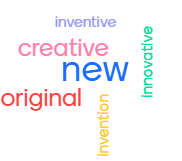
Form a visual image of a topic by using the word cloud feature on mentimeter.com. Ask students to give synonyms for a vocabulary word or brainstorm words associated with a certain topic. Mentimeter will create a visual image with the words.
Unit Provocation
Are you tired of introducing every unit with a YouTube video clip? Get students excited about a new unit or lesson in a unique way.
Emoji Translate
Everyone loves emojis! 😊 Introduce a lesson by inserting a reading passage from the unit into emojitranslate.com. This website will substitute some of the words for emojis. Students will be much more engaged when deciphering emojis to figure out the text!
Canva AI Generator
You’ve heard a picture is worth a thousand words right? Now you can use the AI generator in Canva to create the exact picture that you are looking for. Need an image of a new invention that automatically organizes your desk for you to introduce your new invention unit? Ask the AI generator to create one.

Distort an Image
Once you have some amazing AI images you can distort them and have students try to figure them out to increase engagement. Upload your photo to lunapic.com. Add an effect to change the image. The image below uses the Lego Style effect. Have students guess the image before showing them the original.

Online Word Puzzles
Students will expand their knowledge of how words work with these fun games.
Wordle
Wordle is probably the most well known word game. Players guess a five letter word. Letters in the word that are in exactly the right place turn green. Letters in the word that are in an incorrect place turn yellow. Players get six chances to get the word correct. When students get the hang of the game it is fun for them to create puzzles for others to solve.
Squaredle
Squaredle is a free online game in which 16 letters are arranged in rows. Players must draw lines through connecting letters to form words. There are lots of possibilities, but it is fun to play even if you don’t find them all.
7 Little Words
This online game has a free daily puzzle that asks players to find seven words. The words are broken up into segments and words are found based on the given clues and number of letters. The hint button is helpful as it can be challenging to figure out all of the words.
Find these online word games and others on the free reading choice board.

Printable Word Puzzles
Students will problem-solve to figure out words or phrases in these puzzles.
Word Ladders
Word Ladders require you to get from one word to another word by only changing one letter at a time. The starting and ending word must have the same number of letters. Some versions have clues and others do not. You can read more about word ladders in this blog or download these free word ladders to try.

Word Scramble
These puzzles contain a set of letters. Students form as many real words as possible using the letters provided. They can be used as an early finisher activity or played with a group as a game. Each letter is worth one point in the game version.
License Plates
While most license plates are assigned randomly, some people pay extra to personalize their license plates. Have you ever been stumped by the message? Students decode six character messages to determine the message in these puzzles.
Rebus Puzzles
These rebus puzzles use word and picture clues. Try compound words or idioms.

I hope you found a new idea to try. Feel free to add a comment and let me know how it went.
 Enhancing Enrichment
Leave a comment