Hexagonal thinking is a creative and visual way to explore ideas and make connections between them. It is an excellent activity to get students to actively participate and engage with others. It can be used in the gifted and talented classroom to form connections between classmates, discuss the central ideas in books, and explore concepts in a unit of inquiry.
How Does it Work?
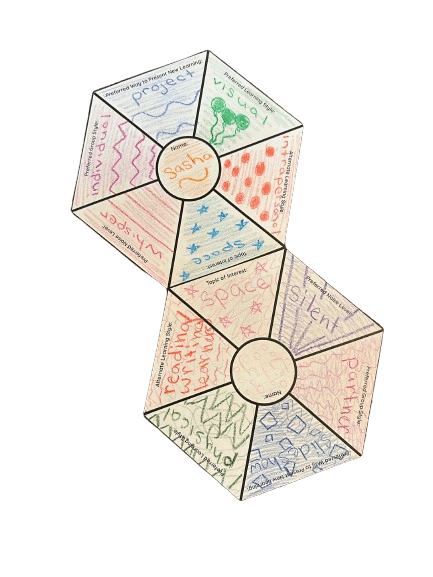
Hexagons have six sides to connect to six different hexagon sides. A hexagon can be connected on any side to another hexagon side as long as the connection can be explained. Hexagon sides do not have to be an exact match.
Why Should I Use It?
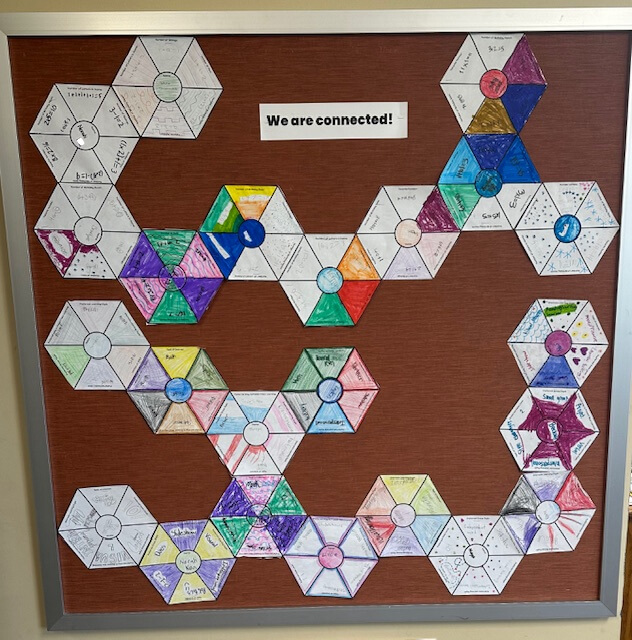
Hexagonal thinking is a way to think critically and determine connections. Students have a chance to explain their thinking and persuade others to see their connections. It also allows students to see the bigger picture of a concept, particularly when hexagons are joined in a visual display.
How Can I Use It?
In its most guided form, hexagons can be split into six different sections. Each section has a specific prompt.
In an open-ended form, students can use each section to tell about a topic anyway that they see fit.
Hexagons can also not be split into sections at all. One word or topic can be written in the middle of the hexagon. All six sides will use this same concept.
Hexagonal thinking can be used at the beginning of the year to help students see connections between themselves and their classmates. It can be used as part of a literature discussion group to discuss the central concepts of the book. It can be used with a unit of inquiry to discuss connections between ideas.
Class Connections
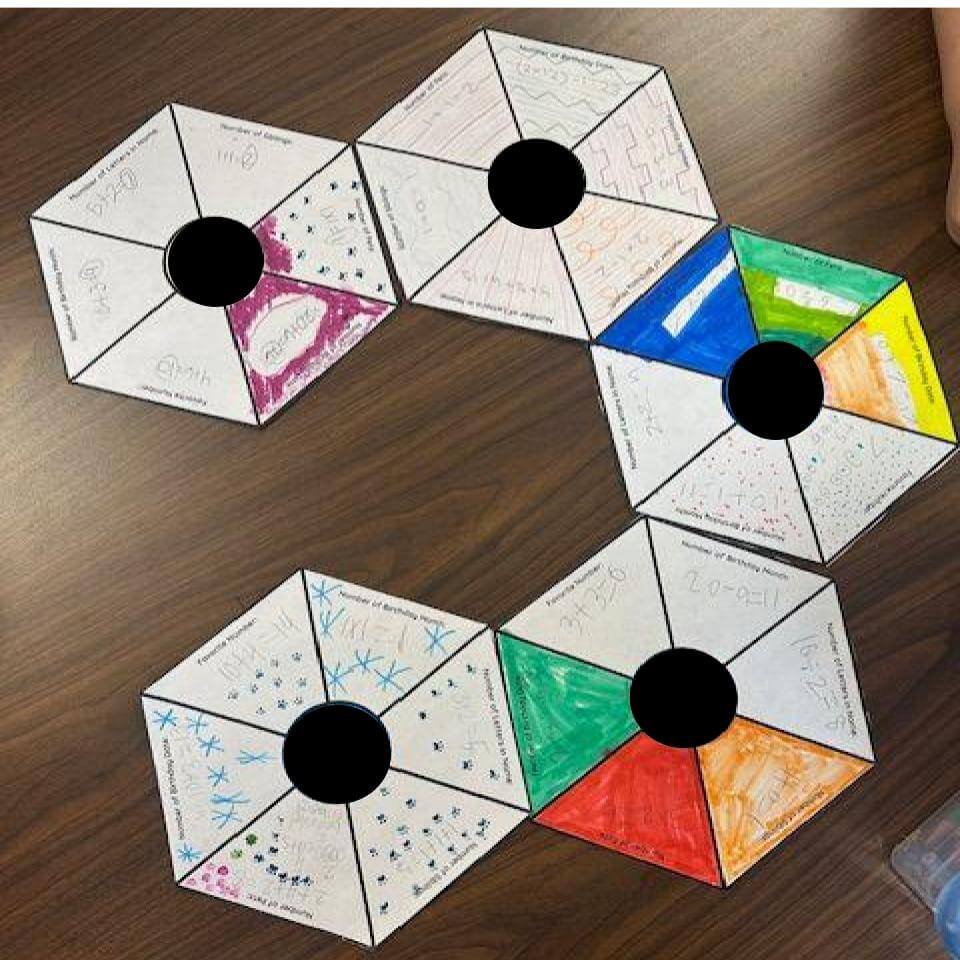
Hexagonal thinking makes a great back to school activity because it helps students see how they are connected to one another. Each student fills in a hexagon by answering prompts to share their learning preferences, interests, favorites, or even fun facts using numbers for a math twist. Once completed, students place their hexagons together, matching sides with others who share similar responses. The goal is to link all the hexagons into one connected group, which can then be displayed as a reminder of the ways your class is connected. If you would like a ready to use version, the Back to School Hexagonal Thinking resource is available to print and use right away.
Literature Discussion Groups
Hexagonal thinking is a great way to discuss a book. Each participant can write the important themes, events, or character traits of a central character on their hexagon. Hexagons can then be joined to show the similar thinking of group members. Students will need to justify their thinking and support their reasoning with text evidence. The hexagons can then be joined to create a visual display. Viewing the display allows students to broaden their understanding of all of the events or themes in the book.
Unit of Inquiry
Hexagonal thinking can also be used with a unit of inquiry or project-based learning. When introducing a new unit, students can be asked to write vocabulary terms that fit into the unit. They can then be arranged to form connections. This will allow you to see what students already know and even help map out the unit.
During the unit, students could use hexagons to write questions they have about the concepts. These could be used in a similar way as the hexagons before the unit to create inquiry pathways.
After the unit, hexagonal thinking could be used to summarize the learning, share common understandings with others, and show relationships between concepts and understandings.

Using hexagonal thinking in your gifted and talented classroom can help students think critically, explain their ideas, and visualize connections.

 Enhancing Enrichment
Leave a comment