
Do you have students who complete assignments at record speeds? Are you running out of options for them to do next? It can be frustrating and time-consuming to constantly find new activities that engage and challenge your high-achieving early finishers. This list includes five easy options to implement in your classroom today.
Early Finishers Should Not
Before learning about things that early finishers could do, let’s start with what they should not do. These are all real examples from classrooms that I have worked in, and some, that I have even done myself. However, when we know better, we do better.
Grade Other Students’ Work
Your high-achieving and gifted and talented students are not teachers or adults. Even if they seem responsible and helpful, they should not be grading other students’ papers, even if they are eager to help out. The primary problem with this is a privacy issue. Students should not know how other students are scoring on school work and should not have the ability to compare students’ scores. There are also better things for them to be doing.
Help Other Students Finish
While it is true that high-ability learners still gain understanding by teaching a new concept to others, and that the student receiving the help may benefit from having a concept explained by a different person, this should still not be a “go-to” task for early finishers. Again, students who finish early are not teachers. They should not be responsible for helping other students in the classroom and may not be the most patient teachers either. They should instead get the opportunity to explore their own interests and increase their own understanding.
Do More of the Same Problem
How motivated are you going to be to complete your work right away if you know that you will just get more work when you are finished? If a student has already demonstrated mastery of a concept, there is no reason for them to keep doing the same type of problem. They can be given work on the same topic, but it should require a deeper level of understanding.
Early Finishers Should
So, what should early finishers do? Work for early finishers needs to be engaging, motivating, and require critical thinking. No wonder it is so hard to find work for early finishers! Here are some easy to implement examples of what this could look like in your classroom.

Read Independently
Of course one of the best and easiest extensions for students who complete their reading assignments early is just for them to read independently. To keep this engaging, students should be able to choose their own books (as long as it is an appropriate reading level and content) and not have to complete extensive written work on each part. One way to still connect with learners on their independent reading is to have them use these bookmarks with sticky notes. They can add sticky notes while reading and you can have a check-in with them when you have a few minutes. Download these for free now.

Independent Projects
Many gifted and talented students love to complete independent projects in which they explore a topic of interest in greater depth. I allow my students to choose their topic, as long as they okay it with me, and then take notes as they research. I like students to complete a final product to teach others about what they learn. This could be a report, poster, digital poster, or slideshow.
Project-Based Learning
Project-based learning allows students to develop a deeper understanding of a concept without moving on to a new topic. Students also get the opportunity to apply their learning in a real-world situation. This allows students to practice what they learned in a fun and engaging way. One of my favorite ways to do this is to have students create their own board games to teach others what they learned.
Puzzles
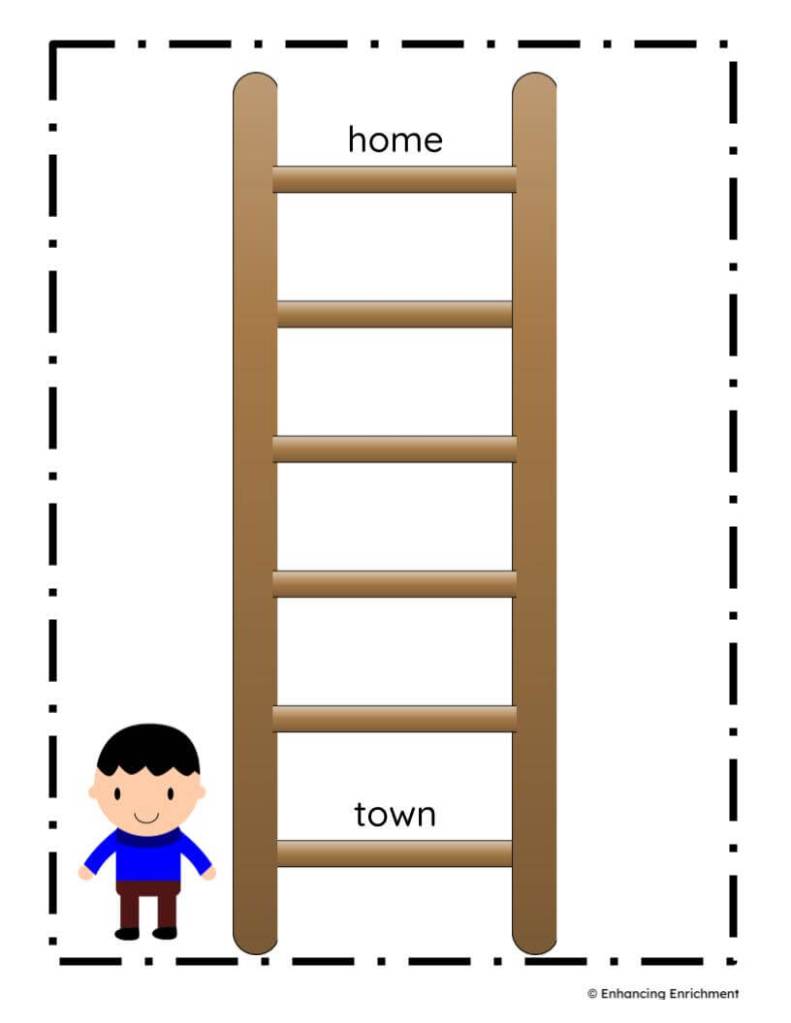
Students love puzzles! They are fun and let students develop confidence and perseverance. Some great reading puzzles that increase word knowledge and vocabulary include hink pinks, word ladders, analogies, and rebus puzzles. Math early finishers could try math logic puzzles, mobile puzzles, and find the one that doesn’t belong.
Choice Boards
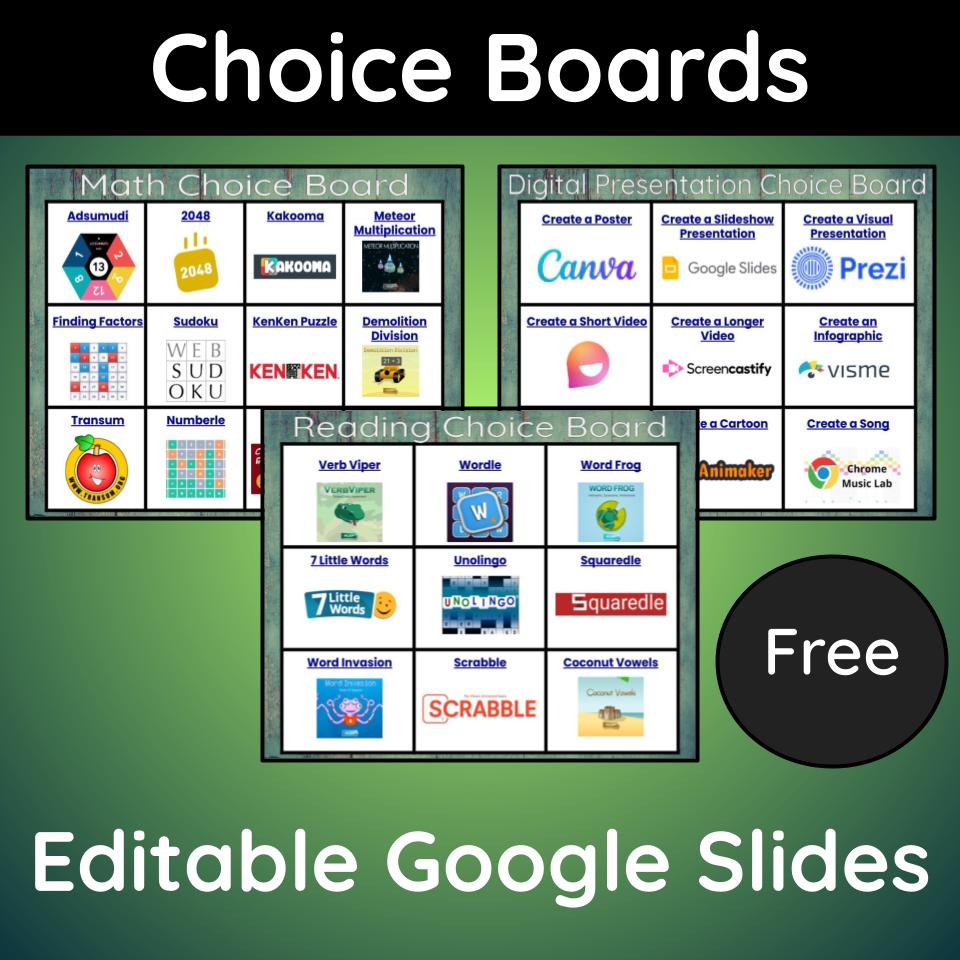
Students are more engaged and motivated when they have agency over their own learning. Agency includes having voice, choice, and ownership. Choice boards are great for this. You can click here to get a free copy of choice boards for reading, math, and presentations. Having a variety of options also allows students to choose an activity that fits their learning needs and style.
I hope that you found an idea that you can implement in your classroom with your early finishers today. Please leave a comment and let me know how it went.
 Enhancing Enrichment